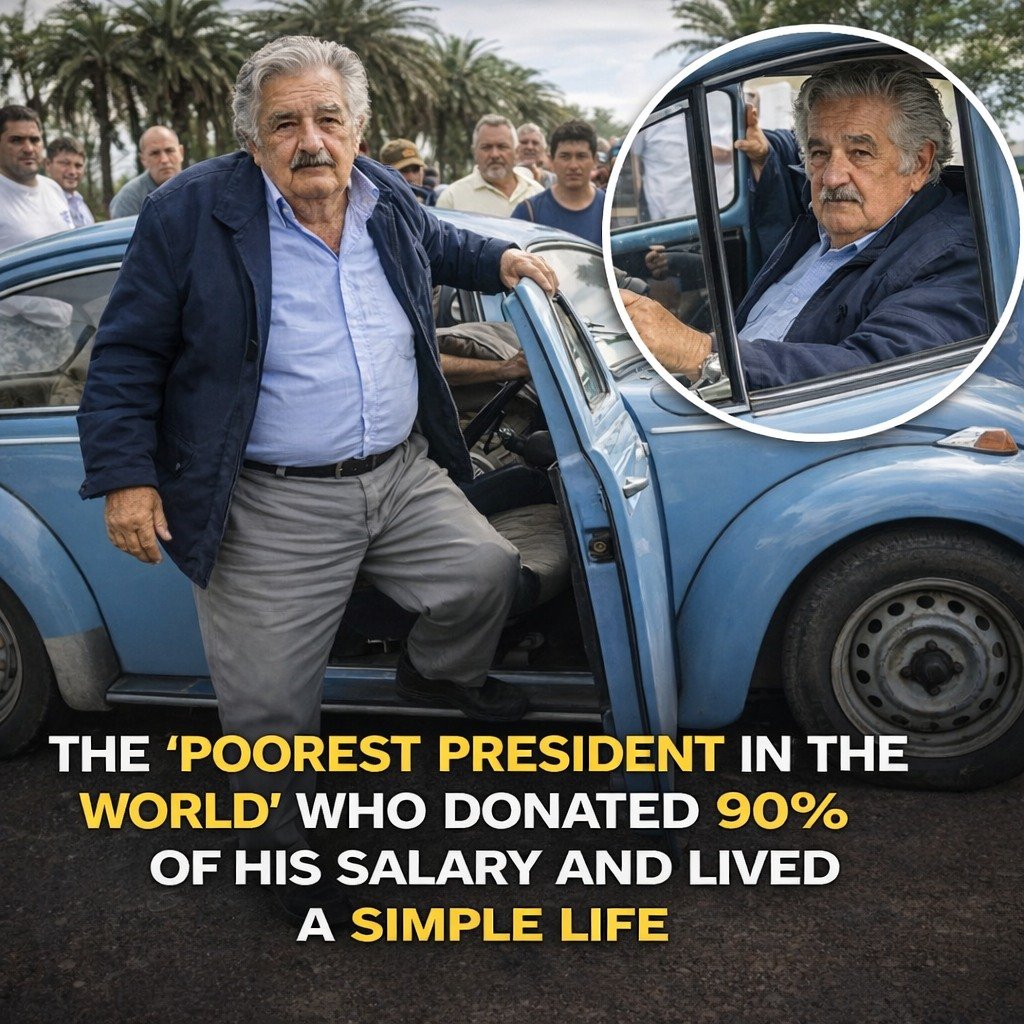
In a world where political power is often associated with privilege, luxury, and distance from ordinary citizens, the story of José Mujica stands as a striking contradiction. Serving as president of Uruguay from 2010 to 2015, Mujica became globally known not for accumulating wealth, but for consciously rejecting it. His lifestyle raised a powerful question: why don’t more leaders choose to live this way?
Unlike many heads of state who embrace official residences and high-end benefits, Mujica chose simplicity. He declined to live in the presidential palace and instead remained on his modest rural farm outside Montevideo with his wife, Lucía Topolansky. The setting was humble—far removed from the grandeur typically associated with national leadership. His daily routine reflected the same philosophy. He drove a 1987 Volkswagen Beetle worth around $1,800, wore plain clothes, and avoided unnecessary security measures at his home.
Perhaps most remarkable was his approach to wealth. Mujica donated approximately 90% of his presidential salary to charities and small businesses, keeping only what he needed for a modest lifestyle. For him, leadership was not about personal gain but about service. While many politicians are scrutinized for financial excess, Mujica became a symbol of integrity and restraint.
But his philosophy did not emerge overnight. Long before entering office, Mujica endured 14 years in prison during Uruguay’s military dictatorship. Those years of hardship shaped his worldview in profound ways. Isolation, deprivation, and reflection led him to reconsider what truly matters in life. Rather than chasing material success, he came to value freedom, simplicity, and human connection.
When the media labeled him “the poorest president,” Mujica rejected the title. In his view, poverty is not defined by how little one has, but by how much one feels they need. He argued that people who constantly chase more—more money, more possessions, more status—are the ones truly living in scarcity. By contrast, someone who is content with less can live a richer, more fulfilling life.
This perspective challenges modern consumer culture, where success is often measured by accumulation. Mujica’s life suggests an alternative definition of wealth—one rooted in contentment, purpose, and balance. His example forces us to confront uncomfortable questions about leadership. Should leaders reflect the lifestyles of the people they serve? Does simplicity make a leader more trustworthy? And why is such a lifestyle so rare in positions of power?
One reason may be that power often attracts those who seek status and recognition. The systems surrounding political leadership also reinforce privilege, making it difficult for individuals to step outside those norms. Mujica’s choices were not just personal; they were a quiet form of protest against excess and inequality.
Even after leaving office, Mujica continued to live the same way, reinforcing the authenticity of his beliefs. He did not treat simplicity as a temporary political statement but as a lifelong commitment. That consistency is what made his story resonate worldwide.
In the end, Mujica’s legacy is not just about policy or governance—it is about values. He demonstrated that leadership does not have to be defined by wealth or luxury. Instead, it can be grounded in humility, generosity, and a clear sense of purpose.
His life invites both leaders and ordinary people to rethink what it means to be rich. Perhaps true wealth lies not in what we own, but in what we can live without.