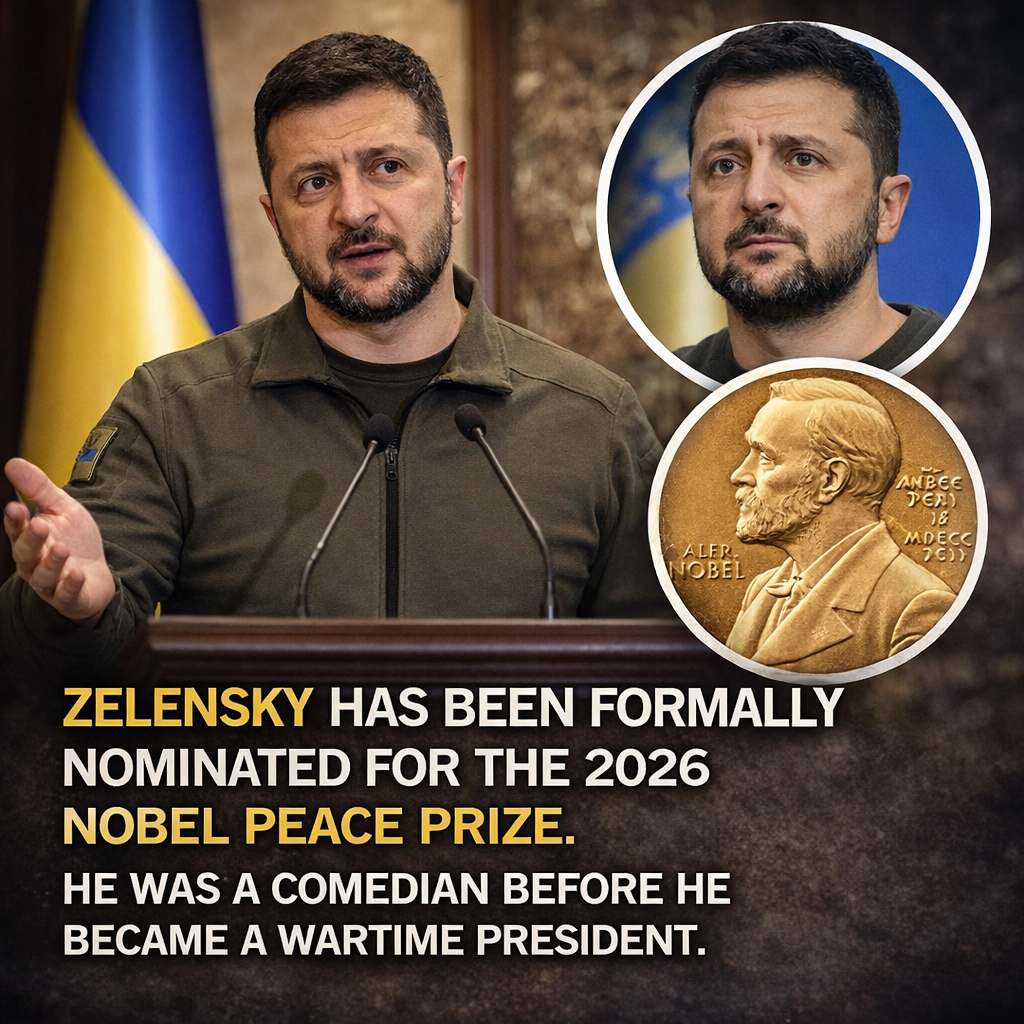
The nomination of Ukrainian President Volodymyr Zelensky for the Nobel Peace Prize has sparked a global debate about what “peace” truly means in a time of war. At the center of the discussion is a difficult question: can a leader actively involved in a conflict be recognized for promoting peace?
Zelensky’s nomination for the 2026 prize was submitted by a professor from the University of Oslo. The argument behind the nomination is that Ukraine’s resistance to Russian aggression is not only about national survival but also about protecting democratic values across Europe. Supporters of this view believe that by resisting invasion, Ukraine is helping maintain stability and preventing further escalation that could threaten neighboring countries.
It is important to understand that a nomination for the Nobel Peace Prize does not mean a candidate is likely to win. Each year, hundreds of individuals and organizations are nominated by eligible figures such as university professors, national politicians, and former laureates. The selection process is highly confidential, and the Norwegian Nobel Committee does not publicly disclose the final shortlist. In fact, all nomination records are kept secret for 50 years, which means the public rarely knows the full scope of candidates in any given year.
The winner of the 2026 Nobel Peace Prize will be announced on October 10, following months of internal review and deliberation by the committee. Historically, the prize has been awarded to a wide range of recipients—from diplomats and activists to international organizations. In some cases, it has even been given during ongoing conflicts, reflecting the committee’s interpretation of peace as both an outcome and a process.
Supporters of Zelensky’s nomination argue that his leadership during the Russian invasion of Ukraine demonstrates a commitment to democratic principles under extreme pressure. When Russia launched its full-scale invasion in 2022, Zelensky chose to remain in Kyiv rather than leave the country, a decision that many view as a powerful symbol of resilience. His public communication, both domestically and internationally, has played a key role in maintaining morale and securing global support for Ukraine.
From this perspective, defenders of the nomination believe that protecting sovereignty and resisting aggression can be seen as acts that contribute to long-term peace. They argue that if unchecked, expansionist actions could destabilize entire regions, making resistance a necessary step toward preserving international order.
However, critics see the situation differently. They argue that the Nobel Peace Prize should primarily recognize efforts to end conflicts, reduce violence, or promote reconciliation. From this viewpoint, awarding the prize to a wartime leader may blur the distinction between peacebuilding and military engagement. Some believe that honoring a leader actively involved in war risks redefining the purpose of the award itself.
This debate is not entirely new. Over the years, the Nobel Peace Prize has occasionally been controversial, with some selections praised as visionary and others questioned for their timing or implications. The case of Zelensky adds another layer to this ongoing discussion, particularly because the conflict in Ukraine is still unresolved.
Adding context to his leadership, Zelensky’s background is also notable. Before entering politics, he was widely known as a comedian and actor. In 2019, he was elected president of Ukraine, transitioning from entertainment into one of the most challenging political roles in Europe at a critical moment in history.
Ultimately, his nomination reflects broader questions about how peace is defined in the modern world. Is peace simply the absence of war, or can it also include the defense of values and sovereignty during conflict? As the Nobel Committee prepares to make its decision, the debate surrounding Zelensky’s candidacy continues to highlight the complexity of recognizing peace in a world where conflict still persists.