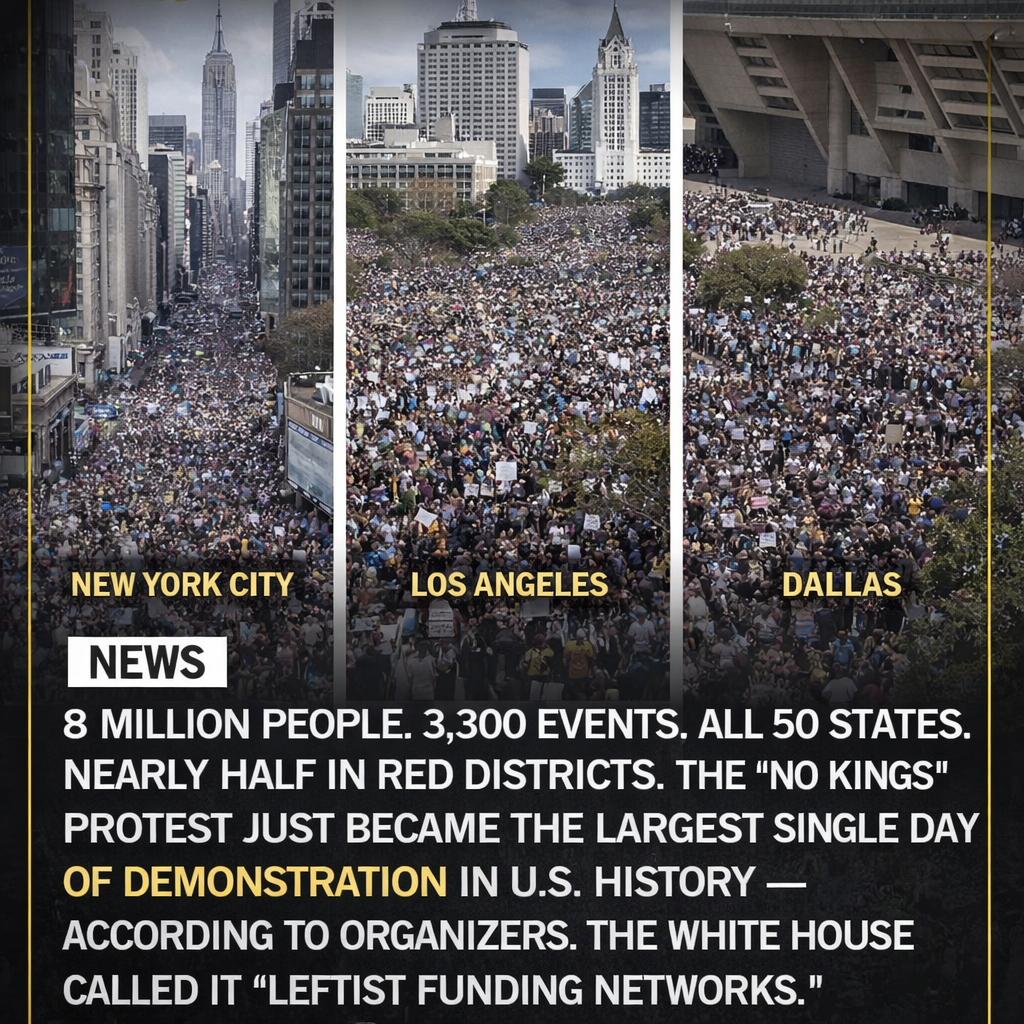
On March 28, 2026, the United States witnessed one of the largest waves of public protest in its history, as millions of people took to the streets in demonstrations known as the “No Kings” protests. The movement, directed against President Donald Trump and his administration, unfolded across all 50 states, with events ranging from major city rallies to gatherings in small rural towns.
Organizers of the protests estimated that approximately 8 million people participated in more than 3,300 separate events nationwide. If accurate, this would make it the largest single-day protest in U.S. history. However, it is important to note that these figures come from organizers, and independent verification of total attendance has not yet been confirmed.
The protests were part of a broader movement that has been building since 2025, with previous “No Kings” demonstrations already drawing millions. The March 2026 protests marked the third major mobilization, showing both growth in participation and geographic reach. Demonstrations were not limited to traditionally liberal urban centers; many took place in conservative-leaning states such as Texas, Florida, and Ohio, highlighting the wide national spread of the movement.
At the center of the protests were several key political and social issues. Many participants expressed opposition to intensified immigration enforcement carried out by U.S. Immigration and Customs Enforcement (ICE), particularly following controversial incidents involving federal agents. Others protested against the ongoing conflict involving Iran, rising living costs, and what they described as increasing authoritarian tendencies within the government.
The largest single gathering took place in the Minneapolis–Saint Paul area, where approximately 200,000 people attended the flagship rally. The event featured speeches from prominent public figures, including Senator Bernie Sanders and activist Jane Fonda, as well as a musical performance by Bruce Springsteen. Their presence underscored the high-profile nature of the movement and its ability to attract national attention.
While most demonstrations were peaceful, there were isolated incidents of tension and confrontation. In Los Angeles, clashes between protesters and law enforcement near a federal detention center led to arrests and the use of crowd-control measures such as tear gas and non-lethal projectiles. These incidents represented a small fraction of the overall protests, which were largely described as orderly and nonviolent.
The White House responded critically to the protests, dismissing them as being driven by organized political funding networks and suggesting that they did not reflect broad public support. This response highlights the political divide surrounding the demonstrations, with supporters viewing them as a legitimate expression of democratic participation and critics framing them as politically motivated activism.
Scenes from across the country illustrated the scale and diversity of the protests. In Washington, D.C., demonstrators marched past the Lincoln Memorial chanting “No Kings,” while smaller communities—including towns with populations in the thousands—held their own rallies. This widespread participation suggests that the movement resonated across different regions and demographics.
In conclusion, the March 28 “No Kings” protests represent a significant moment in contemporary American political life. Whether viewed as a historic expression of public dissent or a highly organized political campaign, the demonstrations reflect deep divisions over policy, governance, and national direction. While the exact number of participants remains unverified, there is little dispute that the protests were among the largest and most geographically widespread in U.S. history, signaling a period of heightened civic engagement and political tension.