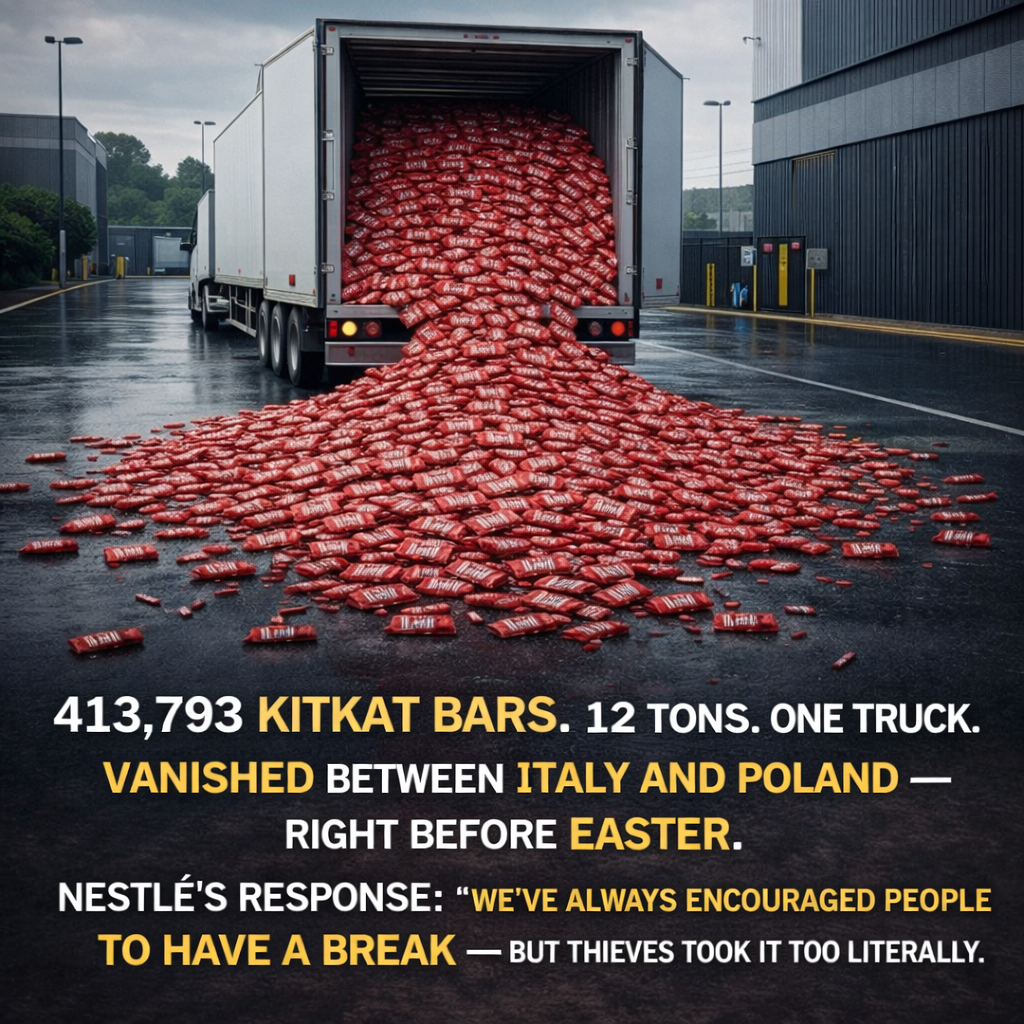
A major cargo theft involving Nestlé has drawn attention across Europe after a truck carrying a massive shipment of KitKat chocolate bars disappeared en route from Italy to Poland just days before Easter.
According to company confirmation on March 27, thieves stole approximately 12 tons of KitKat bars, amounting to 413,793 individual units from a newly launched chocolate range. The truck, which departed from central Italy, never reached its destination—and as of now, both the vehicle and its cargo remain missing.
The timing of the theft has made the incident particularly significant. Easter is one of the busiest seasons for chocolate sales in Europe, with demand surging across retail markets. While Nestlé has stated that overall supply will not be affected, the loss represents a notable disruption in logistics and highlights growing vulnerabilities in supply chains.
Company representatives acknowledged that the stolen products could eventually appear in unauthorized or “unofficial” sales channels, such as informal markets or secondary distributors. However, Nestlé also noted that the products can be identified and tracked using batch codes, which may help authorities trace the stolen goods if they re-enter the market.
This incident is not isolated. Cargo theft has been rising sharply across Europe in recent years. Industry estimates suggest that there were over 50,000 cargo theft incidents in 2023 alone, resulting in approximately $8.9 billion in annual losses. These thefts range from small-scale opportunistic crimes to highly organized operations targeting valuable or high-demand goods, including electronics, pharmaceuticals, and food products.
The KitKat theft reflects a broader trend where criminals increasingly target consumer goods that are easy to resell quickly. Chocolate, particularly in large quantities and close to peak demand periods like Easter, becomes an attractive target due to its high turnover potential and widespread demand.
In a lighthearted remark, a Nestlé spokesperson commented: “We’ve always encouraged people to have a break. But thieves took the message too literally.” While humorous, the statement underscores the unusual nature of the crime and its scale.
Chocolate thefts, while uncommon, are not unprecedented. In 2023, a man in the United Kingdom was sentenced to 18 months in prison after stealing around 200,000 Cadbury Creme Eggs, demonstrating that confectionery products can be lucrative targets for organized theft.
Interestingly, the KitKat incident also had an unexpected ripple effect in the digital world. Shortly after news of the theft went viral, a cryptocurrency meme coin named “KitKat” was reportedly launched on the Solana blockchain. Within hours, the token surged by over 2,000%, illustrating how quickly online communities can capitalize on trending news events—even those involving real-world crimes.
Authorities have not yet disclosed detailed information about how the theft was carried out, such as whether it involved insider knowledge, route interception, or falsified documentation. Investigations are ongoing, and law enforcement agencies across multiple jurisdictions may be involved given the cross-border nature of the shipment.
For logistics companies and manufacturers, the incident serves as a reminder of the importance of enhanced security measures, including real-time tracking, secure routing, and tighter coordination between transport partners. As cargo theft continues to rise, businesses are increasingly investing in technology and risk management strategies to protect high-value shipments.
While Nestlé has reassured consumers that chocolate availability will remain stable during the Easter season, the disappearance of an entire truckload of KitKat bars remains a striking example of how even everyday products can become the center of large-scale criminal activity.