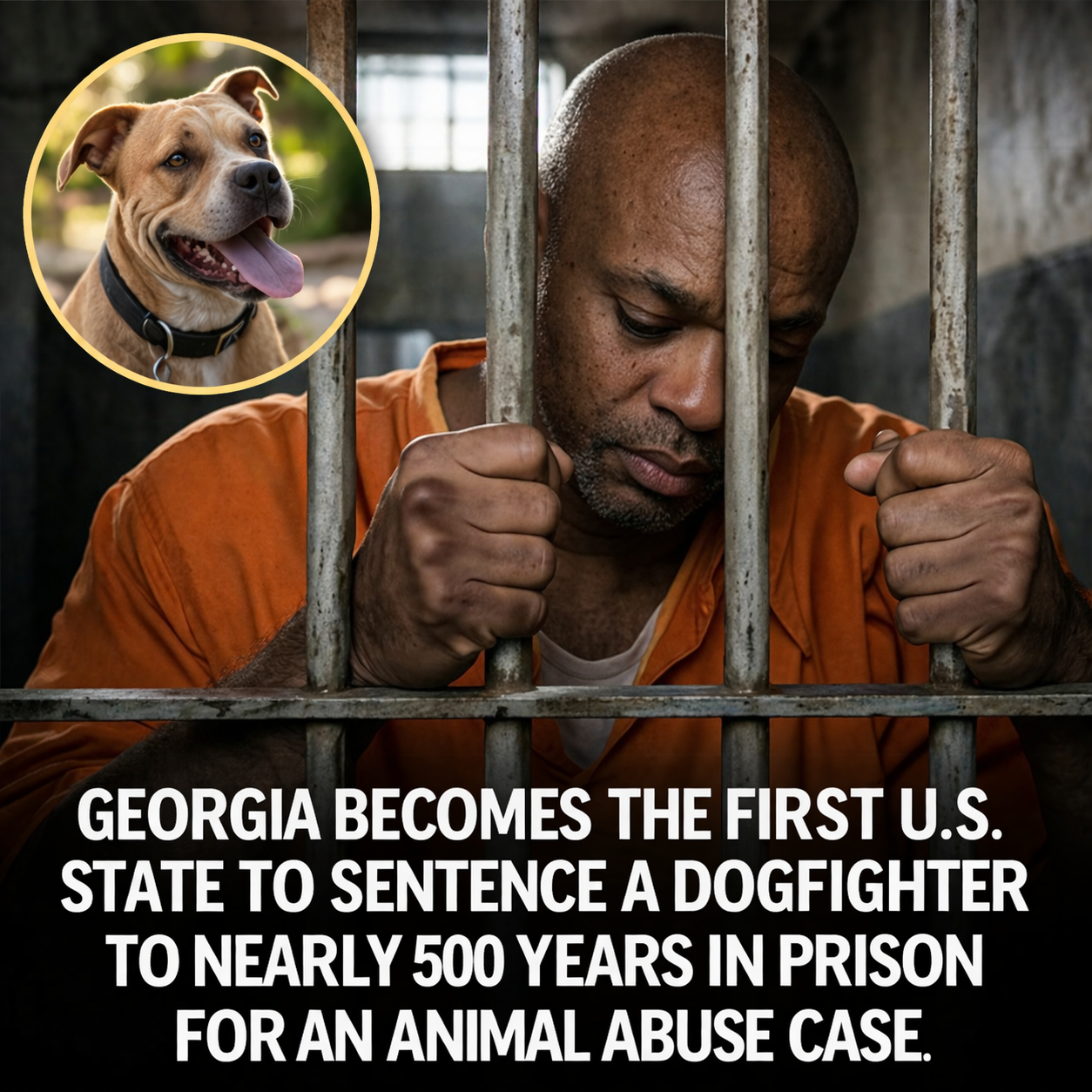
The recent sentencing of a dogfighting operator in Georgia to a combined 475 years in prison has sparked widespread discussion about justice, deterrence, and the protection of animals. The case stands out not only because of the severity of the punishment, but also because of the scale and nature of the crimes involved. Authorities uncovered a large operation where more than 100 dogs were allegedly kept in harsh, inhumane conditions and trained for organized fighting.
Dogfighting is not a minor offense. It is a structured, illegal activity often tied to gambling, breeding networks, and other criminal behavior. In many jurisdictions, including across the United States, it is prosecuted as a felony. Each act—owning, training, breeding, or forcing animals to fight—can carry separate charges. In this case, prosecutors filed dozens of counts, which is how the sentence accumulated to such an unusually high total.
From a legal standpoint, long sentences like this are typically the result of consecutive penalties. Rather than serving all charges at the same time, the convicted individual serves them one after another. While a 475-year sentence is symbolic in the sense that no human will live that long, it reflects the court’s intention to treat each act of cruelty as a separate and serious crime.
Animal welfare organizations have largely supported the ruling, arguing that it sends a strong and necessary message. For years, advocates have pushed for stricter enforcement of animal cruelty laws, emphasizing that such crimes often indicate broader patterns of violence. Research has suggested links between animal abuse and other forms of criminal behavior, which is one reason authorities take these cases seriously.
However, the case also raises an important question: do harsher penalties actually prevent crimes like dogfighting? Evidence on deterrence is mixed. Some studies suggest that the certainty of being caught and punished has a greater impact than the severity of the punishment itself. In other words, consistent enforcement and effective investigation may play a bigger role in reducing crime than simply increasing sentence lengths.
That said, high-profile cases can still influence public perception and awareness. A sentence of this magnitude draws attention to the issue and may discourage individuals who might otherwise consider participating in such activities. It also reassures the public that authorities are willing to act decisively when serious abuse is uncovered.
There is also a broader ethical dimension. Society’s expectations around animal welfare have evolved significantly over time. Actions that were once overlooked are now widely condemned, and laws have adapted accordingly. Cases like this reflect that shift, reinforcing the idea that animals are not disposable property but living beings deserving of protection.
At the same time, prevention remains key. Education, community reporting, and support for animal rescue organizations all play a role in addressing the root causes of cruelty. Strong laws are important, but they are most effective when combined with awareness and early intervention.
In the end, the Georgia case represents more than just a single conviction. It highlights the seriousness with which animal cruelty is now treated and underscores an ongoing effort to hold offenders accountable. Whether such extreme sentences will significantly change behavior in the long term is still open to debate, but they undeniably mark a turning point in how these crimes are addressed.