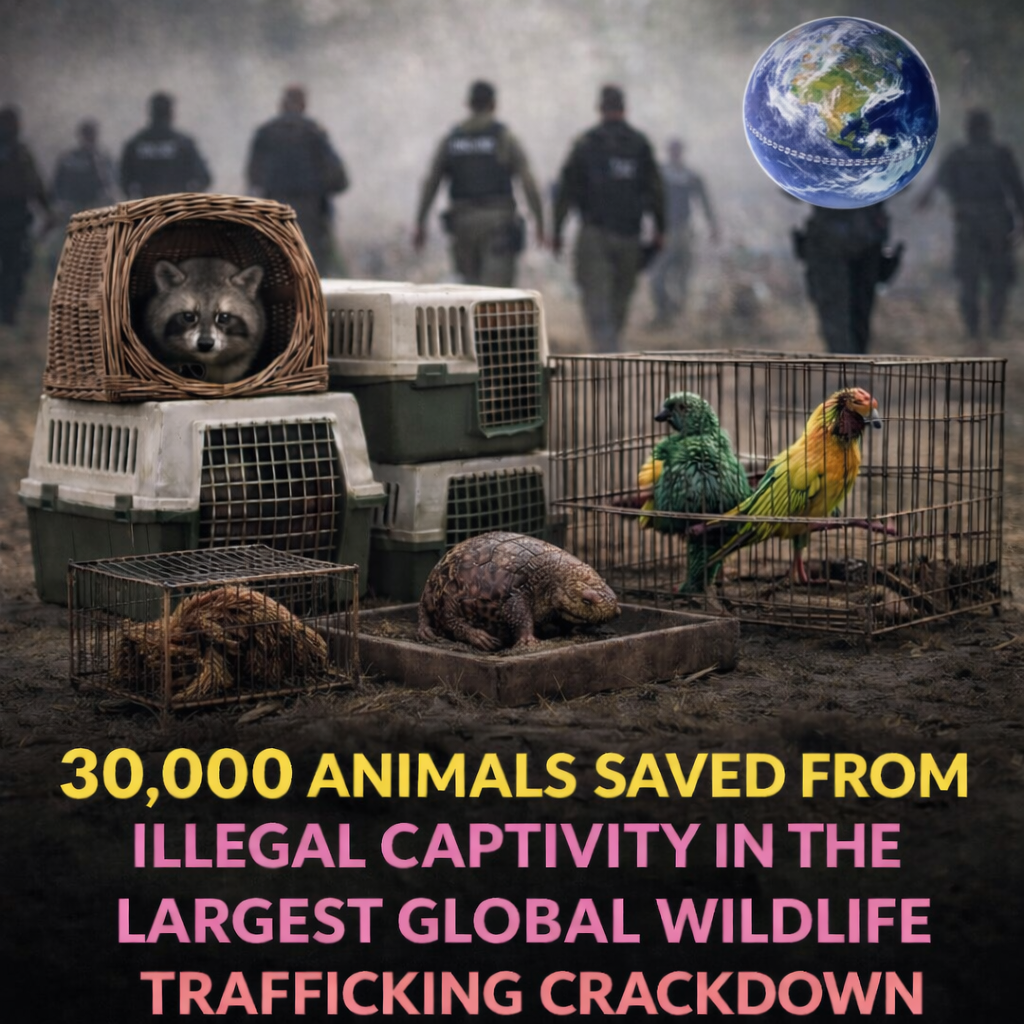
A major global wildlife operation has recently captured attention after rescuing nearly 30,000 animals from illegal trafficking networks in just one month. The sheer scale of this effort highlights both the seriousness of wildlife crime and the potential impact of coordinated international action. While the number itself is striking, the story behind it reveals a deeper and more complex issue that continues to threaten biodiversity across the planet.
Wildlife trafficking is one of the largest illegal trades in the world, often ranking alongside drug and arms trafficking in terms of profit. Animals are captured, transported, and sold under harsh and often inhumane conditions. Many do not survive the journey. Those that do are frequently kept in environments that fail to meet even basic welfare standards. This latest global crackdown offers a rare glimpse into how widespread and organized these operations have become.
The operation involved authorities across 134 countries, making it one of the most extensive wildlife enforcement efforts in recent history. Law enforcement agencies conducted thousands of inspections, leading to the seizure of animals and the identification of numerous suspects connected to trafficking networks. The rescued animals included a wide range of species—from turtles and reptiles to birds and even large mammals like big cats. Each case revealed different layers of the illegal trade, from small-scale smuggling to highly coordinated international networks.
Many of the animals were found in distressing conditions. Some were tightly packed into containers, while others were hidden in luggage or transported without proper food, water, or ventilation. These conditions not only cause suffering but also increase the risk of disease transmission, which can have wider implications for both wildlife and human populations. The operation not only focused on rescuing animals but also on disrupting the systems that enable such cruelty to continue.
What makes this effort particularly significant is the level of global cooperation involved. Wildlife crime does not respect borders, and tackling it requires countries to work together. Information sharing, joint investigations, and synchronized enforcement actions were key factors in the success of this operation. It demonstrates that when governments and agencies align their efforts, they can make meaningful progress against even the most complex illegal networks.
However, while the rescue of 30,000 animals is a major achievement, it also raises important questions about what comes next. Rescue is only the first step. Many of these animals will require long-term care, rehabilitation, and in some cases, reintroduction into the wild. This process can be resource-intensive and requires specialized knowledge to ensure the animals have the best chance of survival.
Beyond immediate care, there is the broader challenge of prevention. Wildlife trafficking continues because there is demand—whether for exotic pets, traditional medicine, luxury goods, or entertainment. Addressing this demand is essential for creating lasting change. Public awareness campaigns, stricter regulations, and stronger penalties for offenders are all part of the solution.
The recent operation also highlights the importance of continued vigilance. One successful crackdown does not eliminate the problem. Trafficking networks are adaptable and often find new ways to operate. Sustained efforts, backed by international cooperation and strong enforcement, are necessary to maintain progress.
Despite the challenges, this operation offers a sense of hope. It shows that large-scale action is possible and that meaningful results can be achieved when countries work together. Each rescued animal represents not just a life saved, but also a step toward protecting ecosystems and preserving biodiversity for future generations.
In the end, the question remains: could continued action lead to stronger protection worldwide? The answer appears to be yes—but only if efforts like this are sustained, expanded, and supported by a global commitment to ending wildlife crime.