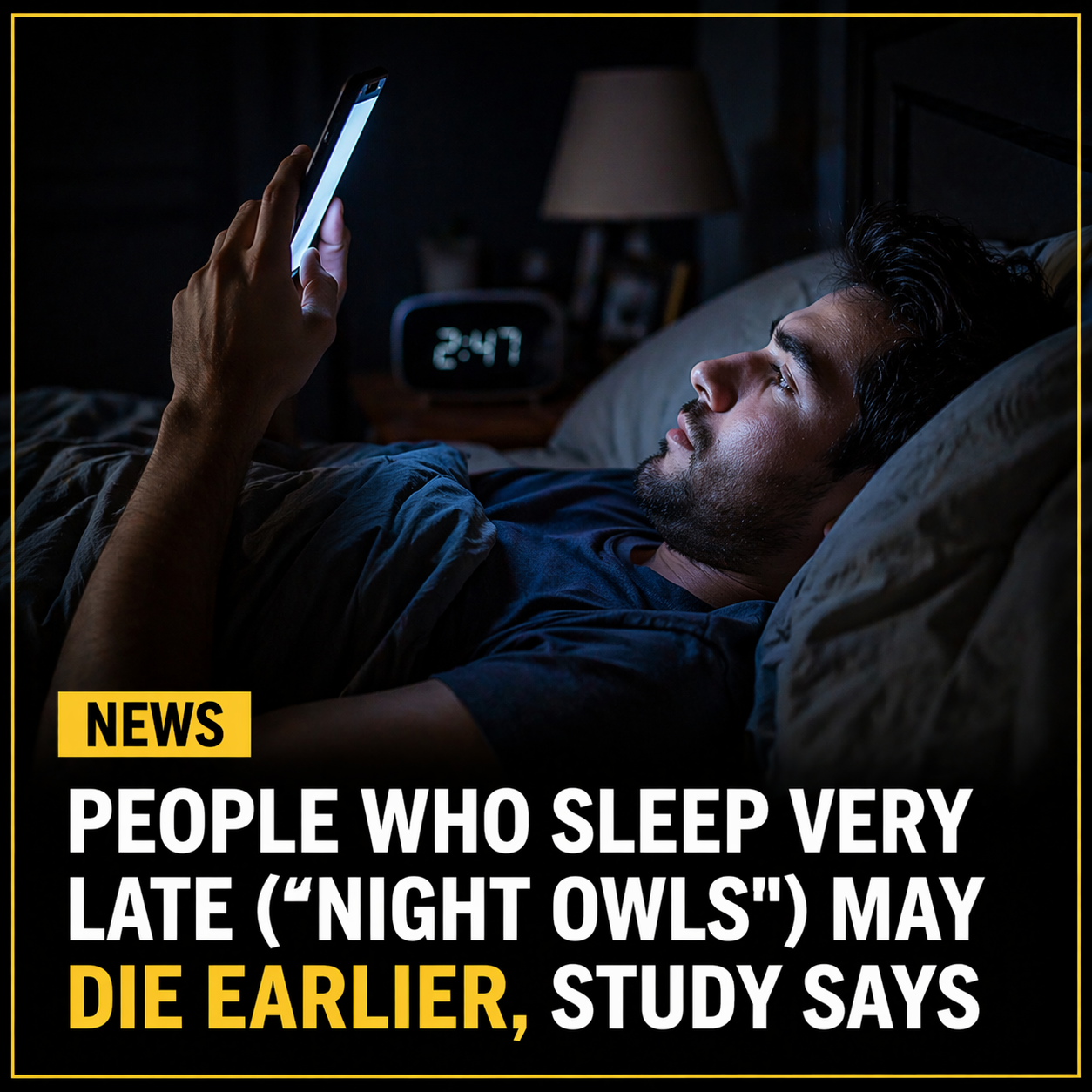
For years, being a “night owl” has often been seen as a harmless personality trait—something tied to creativity, productivity, or simply personal preference. But growing scientific evidence suggests that consistently staying up late and waking up late may carry real health consequences, especially over the long term.
Large-scale studies have begun to paint a clearer picture. One of the most widely cited pieces of research, published in 2018, tracked nearly 500,000 people in the United Kingdom over a period of about 6.5 years. The findings were striking: individuals who identified as night owls had a roughly 10% higher risk of death compared to those who followed earlier sleep schedules. More recently, a 2023 study analyzing around 24,000 Finnish twins reported a similar pattern, with night owls showing about a 9% increased risk—even after adjusting for factors such as body mass index, sleep duration, and education level.
At first glance, this might suggest that simply going to bed late is dangerous. However, researchers are careful to point out that the explanation is more complex. The increased risk does not appear to come from late sleeping alone, but rather from a combination of biological and lifestyle factors that often accompany it.
One key factor is behavior. Studies consistently show that people who stay up late are more likely to engage in habits such as smoking and alcohol consumption. These behaviors, rather than the sleep schedule itself, contribute significantly to long-term health risks. Night owls may also have less structured routines, leading to irregular meal times, reduced physical activity, and poorer overall lifestyle patterns.
Another major factor is something called circadian misalignment. The human body operates on an internal clock—known as the circadian rhythm—that regulates sleep, hormone release, metabolism, and many other vital functions. For natural night owls, this internal clock runs later than average. The problem arises when society doesn’t accommodate that rhythm.
Most work, school, and social schedules are built around early mornings. As a result, night owls are often forced to wake up earlier than their bodies naturally prefer. This creates a mismatch between their biological timing and their daily obligations. Over time, this misalignment can lead to chronic sleep deprivation, even if they technically spend enough hours in bed.
This kind of ongoing sleep debt has been linked to a wide range of health issues, including cardiovascular problems, weakened immune function, and metabolic disorders. It can also affect mental health, increasing the risk of anxiety and depression. In other words, it’s not just how much you sleep that matters—it’s when and how consistently you sleep.
Consistency, in fact, is emerging as one of the most important takeaways from this research. Experts now emphasize that maintaining a regular sleep schedule—going to bed and waking up at roughly the same time each day—may be just as important as getting enough total sleep. Irregular patterns can confuse the body’s internal systems, making it harder to function optimally.
That doesn’t mean all night owls are destined for poor health. Genetics play a role in determining whether someone is naturally inclined to stay up late, and not everyone experiences the same level of risk. However, the evidence suggests that aligning daily habits as closely as possible with one’s biological rhythm—and minimizing unhealthy behaviors—can make a meaningful difference.
Ultimately, the research highlights a simple but powerful idea: sleep is not just a matter of quantity, but of timing and consistency. In a world that often pushes people into schedules that don’t match their natural rhythms, paying attention to how and when we sleep may be one of the most important steps we can take for long-term health.