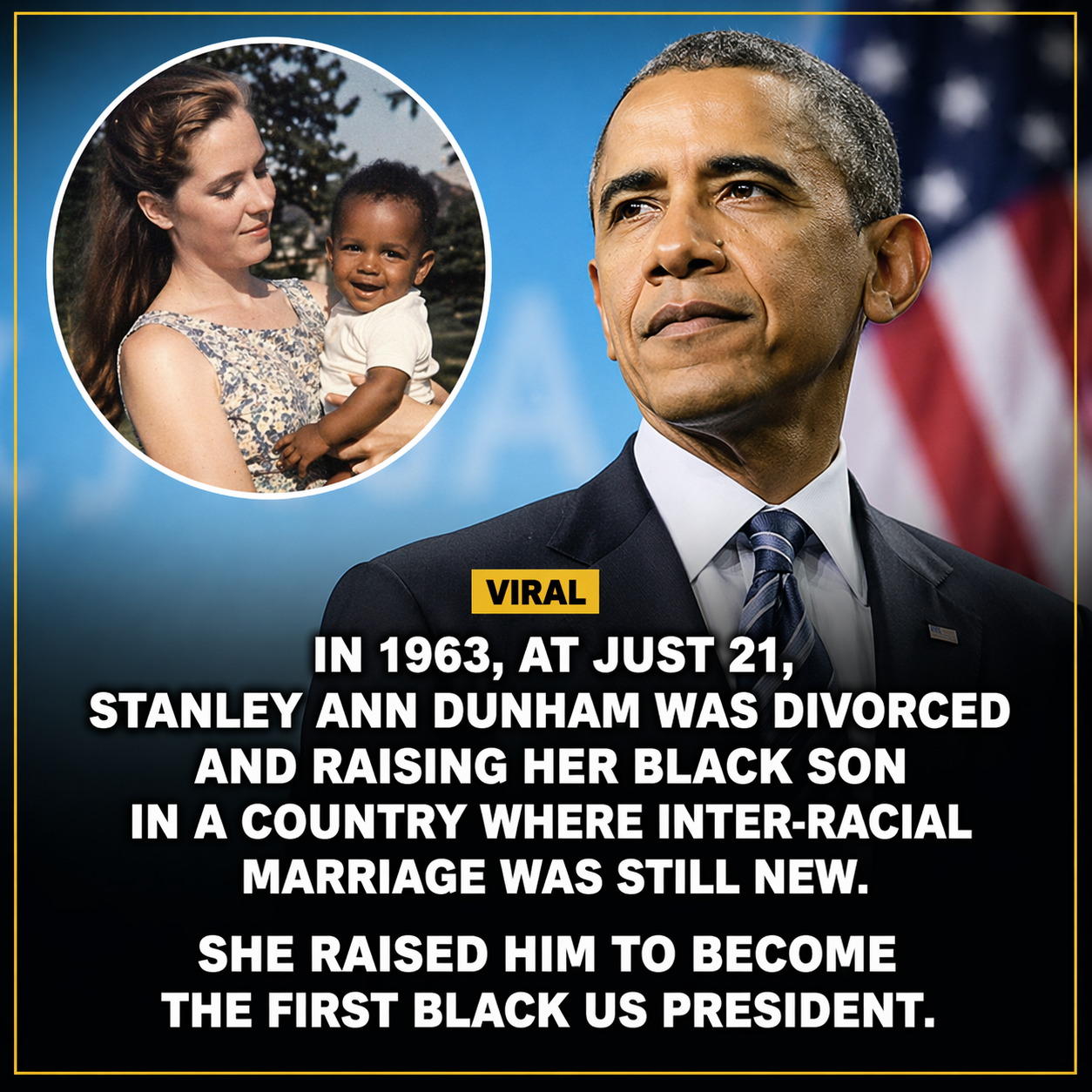
At just 21 years old, she was already navigating a life that many would find overwhelming. Divorced and raising a biracial son during a time when interracial marriage was still illegal in much of the United States, Stanley Ann Dunham’s story is one of quiet strength, resilience, and determination. Long before her son would become a global figure, she was laying the foundation for a life shaped by curiosity, compassion, and courage.
In 1961, Ann Dunham married a Kenyan student, Barack Obama Sr., in Hawaii. Their union itself was unusual for the time, reflecting both boldness and a willingness to challenge societal norms. However, by 1963, the marriage had broken down, leaving Ann as a single mother with a young son—Barack Obama. At a time when social acceptance for interracial families was limited and legal protections were inconsistent across the country, her situation was far from easy.
Following her divorce in January 1964, Ann relied on the support of her parents to help raise her son. This support system allowed her to continue pursuing her education, something she valued deeply. Rather than allowing circumstances to define her limits, she chose to push forward, balancing motherhood with academic ambition. Her determination to continue learning and growing would later shape not only her own future but also the worldview of her son.
Ann Dunham eventually earned a PhD in anthropology, a field that aligned closely with her interest in cultures, communities, and human development. Her academic work was not confined to theory; she applied her knowledge in real-world settings, particularly in Indonesia, where she spent a significant portion of her career. There, she worked on development projects focused on reducing poverty and improving the lives of local communities. Her work often centered on empowering women, supporting small businesses, and promoting sustainable economic practices.
What stands out most about Ann’s life is not just her achievements, but her values. She believed in education as a tool for change, in empathy as a guiding principle, and in the importance of understanding different cultures. These beliefs influenced how she raised her son, encouraging him to think broadly, question deeply, and care about the world beyond his immediate surroundings.
Despite her many contributions, Ann Dunham did not live to see the full impact of her legacy. She passed away in 1995, thirteen years before her son would become the 44th President of the United States. Yet, her influence is unmistakable. The values she instilled, the challenges she overcame, and the example she set all played a role in shaping the person her son would become.
Her story is a reminder that history is often shaped not only by those in the spotlight but also by those who work quietly behind the scenes. Ann Dunham may not have sought recognition, but her life had a profound impact—both on her family and on the broader world. In raising her son under difficult circumstances while pursuing meaningful work, she demonstrated that strength does not always come with loud declarations. Sometimes, it is found in persistence, sacrifice, and an unwavering commitment to doing what is right.
Stanley Ann Dunham’s journey is more than a footnote in history. It is a powerful example of how one person’s resilience and vision can echo across generations.