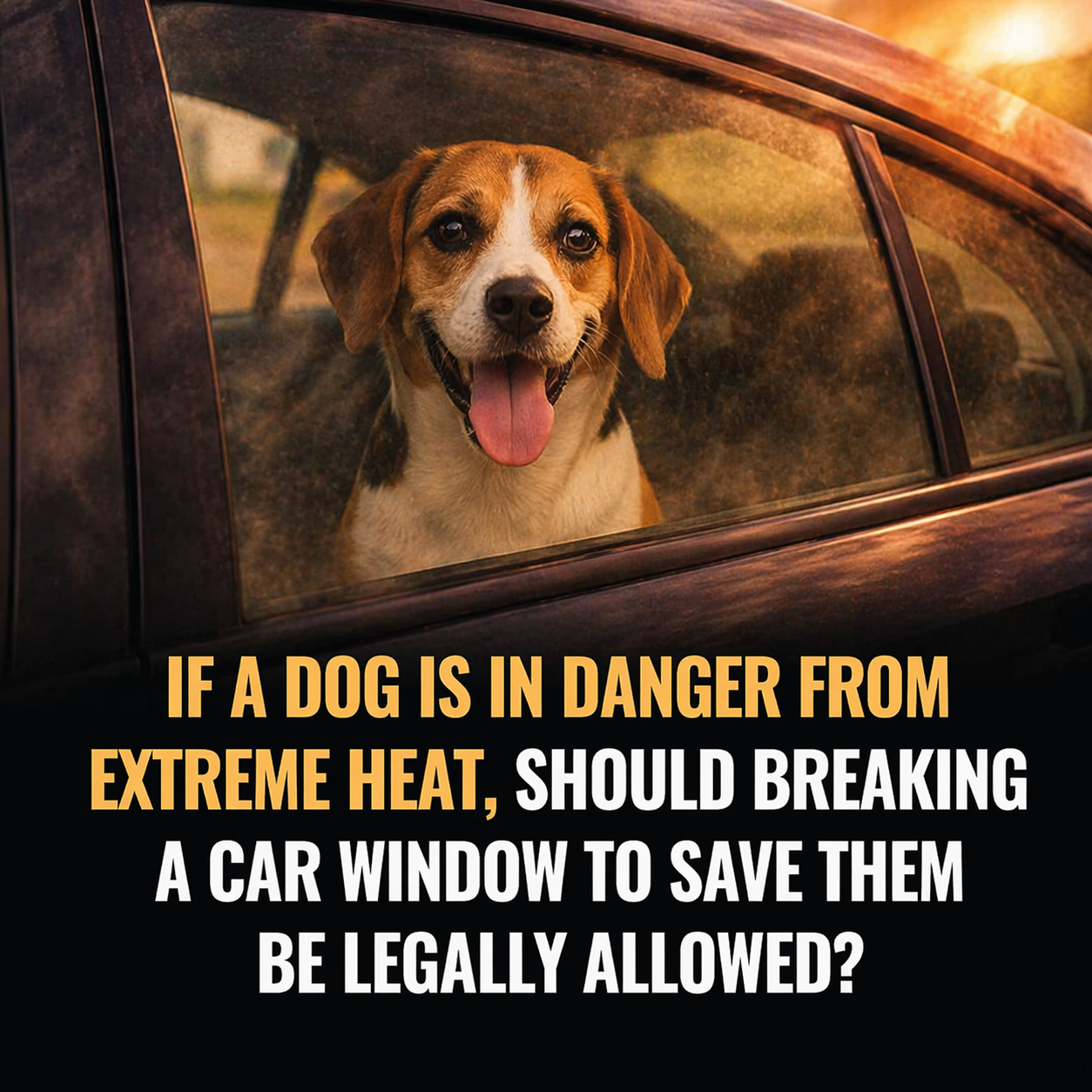
On a hot day, a parked car can quickly become a dangerous trap. Within minutes, the temperature inside can rise to levels that are life-threatening, even if the windows are slightly open. For dogs, the risk is even greater. Unlike humans, dogs cannot sweat to cool themselves effectively; they rely mostly on panting. When the heat becomes overwhelming, their bodies can shut down rapidly, leading to heatstroke, organ failure, and in severe cases, death.
This reality raises a difficult and emotional question: if a dog is clearly in danger inside a locked car, should breaking the window be legally allowed? It’s a situation where urgency, morality, and the law collide in a matter of moments.
From a moral perspective, many people feel that saving a life—any life—should come first. Watching an animal suffer in extreme heat can create a powerful sense of responsibility. In such moments, doing nothing may feel just as wrong as taking action. The instinct to intervene is driven by compassion and the belief that preventing harm outweighs concerns about property damage.
However, the legal side is more complicated. A car is someone’s personal property, and damaging it can have consequences. Without clear guidelines, allowing people to break windows freely could lead to misuse, false assumptions, or even dangerous situations. For example, what if the dog is not actually in immediate danger? Or what if someone acts too quickly without assessing the situation properly?
Because of these concerns, some regions have introduced specific laws that try to balance both sides. These laws often allow individuals to break a car window to rescue an animal—but only under certain conditions. Typically, the person must first check if the animal is truly in distress, attempt to locate the owner, and contact emergency services. The action must also be reasonable and necessary, meaning there was no other practical way to save the animal in time.
This approach reflects an effort to combine compassion with responsibility. It recognizes that while saving a life is important, it should not come at the cost of reckless or impulsive behavior. Clear rules can help ensure that people act with both urgency and care, reducing the risk of unnecessary damage or conflict.
At the heart of this issue is a broader question about how society values animal welfare. Dogs are not just property; for many, they are family members. Their safety and well-being matter deeply, and laws are gradually evolving to reflect that understanding. Still, the challenge lies in creating policies that protect animals without opening the door to unintended consequences.
In the end, most would agree that no animal should suffer or die because of inaction. But the way we respond matters. Breaking a car window may be justified in a true emergency, but it should be guided by clear judgment, awareness, and, where possible, legal protection.
So, should it be legally allowed? In many cases, yes—but with strict conditions. Because when every second counts, the goal should be to save a life while still respecting the balance between compassion and responsibility.