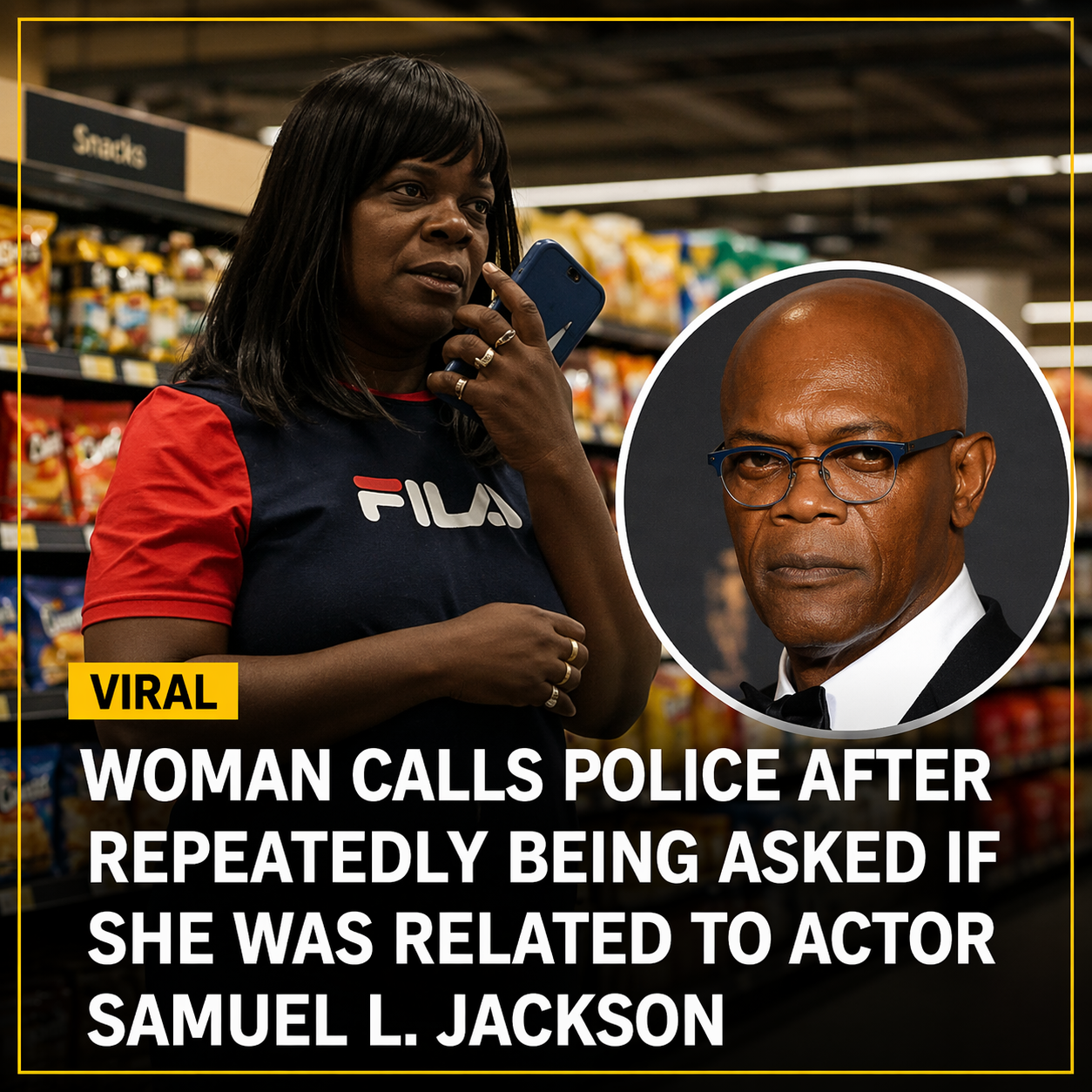
A short video, a simple question, and a strong reaction—that’s all it took to split the internet into two clear camps. The situation seemed straightforward at first: a woman was asked whether she was related to Samuel L. Jackson. According to the person filming, it wasn’t the first time she had been asked. On this occasion, instead of brushing it off or responding casually, she called the police.
What followed was predictable in today’s online environment. The clip spread quickly, and reactions formed almost instantly. One side viewed the situation as an overreaction. To them, being compared to a well-known celebrity is often seen as harmless, even complimentary. They argued that calling the police escalated what could have been a minor, awkward interaction into something far more serious.
The other side saw something different entirely. For them, the context mattered more than the single moment captured on video. Repeatedly being compared to someone else—especially based on appearance—can feel dismissive or even dehumanizing over time. When that comparison crosses racial lines, it can carry additional weight, whether or not harm was intended. What might seem like a casual or even playful comment to one person can feel like a pattern of being reduced to a stereotype for another.
This is where the divide becomes more than just disagreement—it becomes a difference in lived experience. People who have never been repeatedly mistaken for someone else, or grouped into a broad category based on looks, may genuinely struggle to understand why the situation would provoke such a strong response. On the other hand, those who have experienced it regularly may see the reaction not as sudden or extreme, but as the result of accumulated frustration.
The internet, however, is not designed for nuance. Platforms reward quick judgments, clear sides, and strong opinions. As a result, most viewers didn’t pause to consider both interpretations. Instead, they chose one version of the story and stayed there. In one version, the moment is almost comedic—a misunderstanding blown out of proportion. In the other, it reflects a deeper issue about identity, respect, and how people are perceived in everyday interactions.
What often gets lost in these viral moments is the gap between intent and impact. The person asking the question may not have meant any harm. In many cases, people make celebrity comparisons as a way to connect or start a conversation. But intent does not erase impact. If the same question is asked repeatedly, especially after it has already been answered or dismissed, it can shift from harmless curiosity to something more intrusive.
There is also the factor of control. Being compared to a celebrity—even a respected one—takes away a degree of individuality. It frames a person in relation to someone else rather than recognizing them on their own terms. For some, that may not matter. For others, especially if it happens often, it can become exhausting.
At the same time, it is also fair to question the level of response. Calling the police is not a neutral action. It introduces authority, potential escalation, and consequences that go beyond a social interaction. This is why many viewers felt the reaction went too far, regardless of the context leading up to it.
Ultimately, both interpretations can exist at the same time. The situation can be both understandable and excessive, depending on which part of the story is emphasized. That duality is what makes these moments so divisive—and so revealing.
In the end, the viral clip says less about one question or one reaction, and more about how people interpret everyday interactions through their own experiences. Some see humor. Others see frustration. And once those perspectives are formed, they rarely shift.