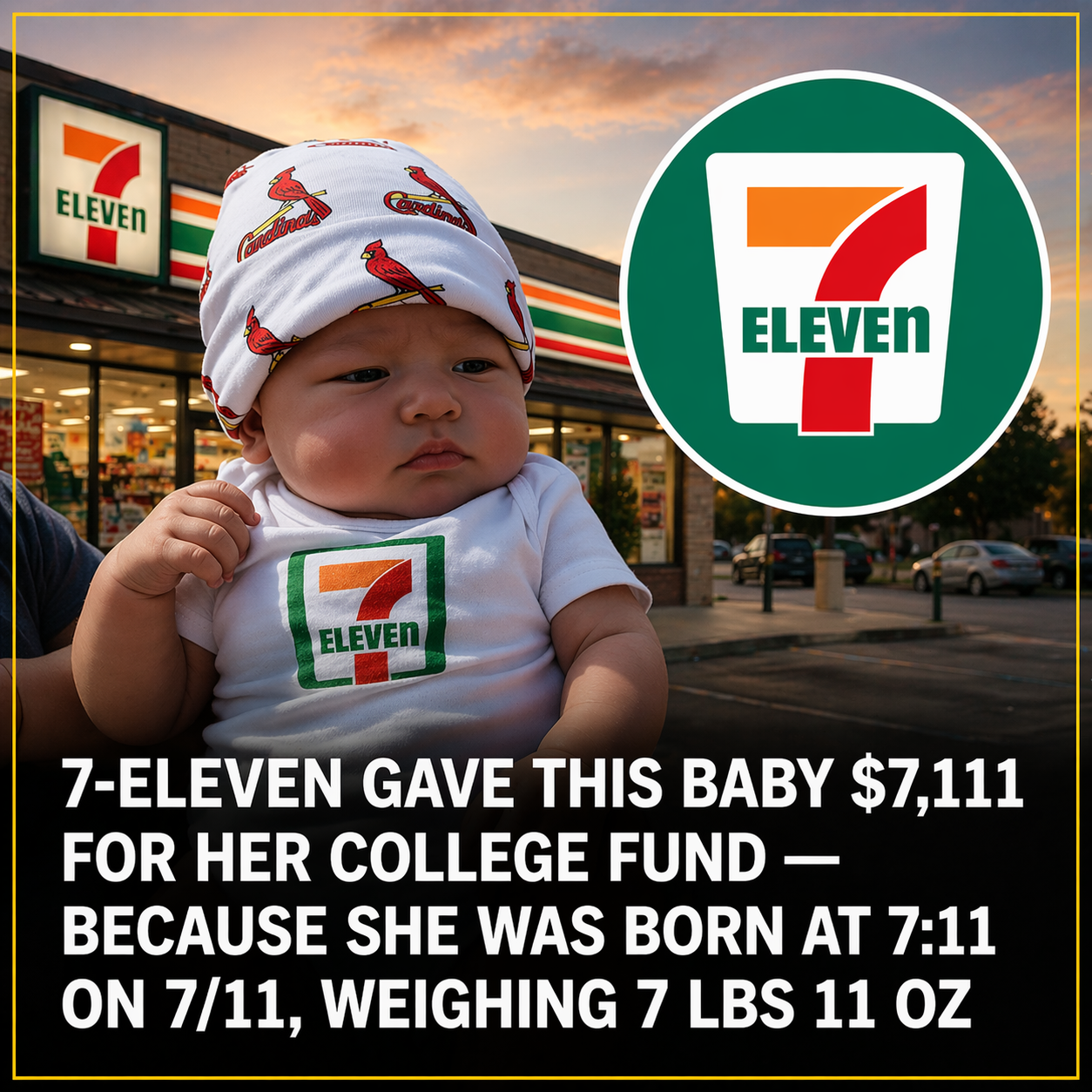
Some stories are so perfectly aligned that they feel almost scripted. One such moment captured widespread attention when a baby girl, J’Aime Brown, entered the world with a sequence of numbers that seemed too precise to be random. She was born on July 11—7/11—at exactly 7:11 p.m., weighing 7 pounds and 11 ounces. Every key detail of her birth echoed the same numbers, creating a rare and striking pattern that quickly caught public interest.
At first glance, it’s easy to see why the story spread so quickly. Humans are naturally drawn to patterns, especially when they appear unexpectedly in real life. Dates, times, and measurements are usually just routine details recorded in hospital charts, but in this case, they combined into something that felt almost symbolic. The repetition of “7” and “11” across multiple aspects of her birth created a sense of wonder that turned a private family moment into a national conversation.
The story took on an even larger dimension when 7-Eleven learned about the coincidence. Known for its branding around the numbers seven and eleven, the company saw an opportunity to celebrate the moment in a meaningful way. Rather than simply acknowledging it, they chose to become part of the story. They contributed $7,111 to the baby’s future college fund, provided her parents with newborn essentials, and even offered a symbolic lifetime gift—a free small Slurpee every year on her birthday.
This response highlights how brands sometimes engage with real-life stories in ways that go beyond marketing. While the gesture certainly aligned with the company’s identity, it also added a layer of generosity and goodwill. For the family, what began as a remarkable coincidence turned into tangible support that could benefit their child for years to come.
But beyond the headlines and brand involvement, the story raises an interesting question: what are the odds of something like this happening? Statistically, the alignment of date, time, and birth weight in such a precise pattern is extremely unlikely. Each of these factors is influenced by different variables—timing of labor, medical conditions, and natural biological processes. When they all converge around the same numerical theme, it creates a moment that feels extraordinary, even if it can still be explained by chance.
This is where human perception plays a powerful role. People tend to assign meaning to patterns, especially when they are neat, symmetrical, or emotionally significant. In reality, with millions of births happening around the world, rare coincidences are bound to occur. Yet when they do, they stand out because they break the randomness we expect from everyday life. They feel special, almost as if they were meant to happen.
There is also a cultural layer to consider. Numbers often carry symbolic meaning in different societies. While “7” is widely associated with luck or completeness in many cultures, “11” can represent alignment or repetition. When these numbers appear together in such a structured way, it amplifies the sense that the moment is more than ordinary. Whether or not one believes in deeper meaning, it’s clear that such patterns resonate on a psychological level.
In the end, the story of J’Aime Brown is less about statistics and more about how people respond to the unexpected. It’s a reminder that even in a world driven by probability and logic, moments of coincidence can still spark curiosity, joy, and connection. They give people something to talk about, something to share, and sometimes, something to celebrate together.
What makes this story memorable isn’t just the numbers—it’s the way those numbers brought attention, generosity, and a sense of wonder into one family’s life. Whether seen as pure chance or something more meaningful, it’s the kind of moment that reminds us how unpredictable—and occasionally delightful—life can be.