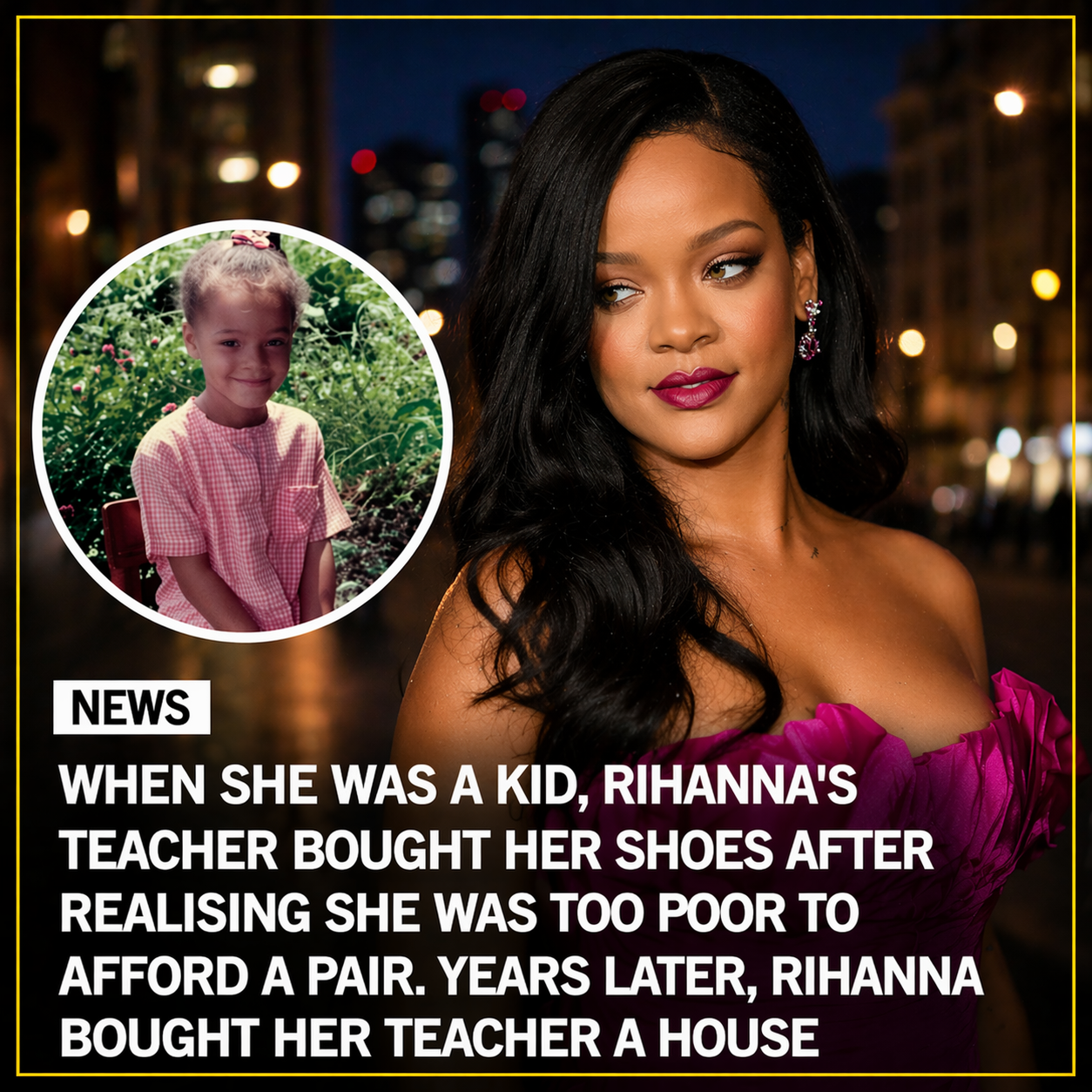
Small acts rarely feel small to the person receiving them. Sometimes, they stay quietly in the background of a life story, shaping how someone sees the world long after the moment itself has passed. The story often told about Rihanna begins not with fame or success, but with a simple, deeply human gesture—one that took place in a classroom in Barbados.
Before she became a global icon, Rihanna was a young girl growing up in a household facing financial hardship. Like many children in similar situations, she went to school without the things others might take for granted. Worn-out shoes—or sometimes no proper shoes at all—were part of her daily reality. It’s the kind of detail that often goes unnoticed, blending into the background of a busy school day. But in this case, someone noticed.
A teacher saw what others might have missed. Without drawing attention or creating embarrassment, she chose to help. She bought Rihanna a pair of shoes. No announcement, no expectation of recognition—just a quiet act of kindness that met a real need in a respectful way. For the child who received them, it was more than just footwear. It was dignity, care, and the feeling of being seen.
Years later, Rihanna’s life would change in ways few could have predicted. She rose from those early struggles to become one of the most successful artists in the world, building a career that extended far beyond music into business, fashion, and philanthropy. With that success came influence, wealth, and the ability to make a difference on a much larger scale.
What makes this story resonate is what happened next—at least as it has been widely shared. After achieving global success, Rihanna learned that her former teacher was struggling. In response, she reportedly bought her a house. The gesture mirrors the one from years earlier, but on a completely different scale. A pair of shoes for a child becomes a home for the person who once offered help without hesitation.
Whether every detail of the story is perfectly documented or not, the message people take from it is clear. It reflects an idea that resonates across cultures and generations: kindness has a long memory. The smallest acts can leave the deepest impressions, and when circumstances change, those who remember often look for ways to give back.
There’s also something powerful about the way the original act was carried out. The teacher didn’t make a public display of generosity. She acted quietly, preserving the child’s dignity while meeting her need. That approach matters. It shows that helping someone isn’t just about what you give—it’s about how you give it.
In many ways, this story has become part of Rihanna’s public image—not just as a performer or entrepreneur, but as someone who values where she came from. It reinforces the idea that success doesn’t have to erase the past. Instead, it can deepen a person’s connection to it, shaping how they choose to use their resources and influence.
Stories like this also invite reflection beyond one individual. They highlight the ripple effect of everyday kindness. A single thoughtful action can carry forward in ways no one can predict. It can influence how someone treats others, how they define generosity, and how they respond when they are in a position to help.
At its core, this is a story about recognition—about seeing someone in a moment of need and choosing to act. It’s about the quiet decisions that rarely make headlines but leave lasting marks. And it’s about the possibility that those moments, however small they seem, can come full circle in ways that are both meaningful and memorable.
A pair of shoes may not seem like much. But for one child, it was enough to be remembered for a lifetime—and, in the story that followed, returned with gratitude on a scale that matched the life she eventually built.