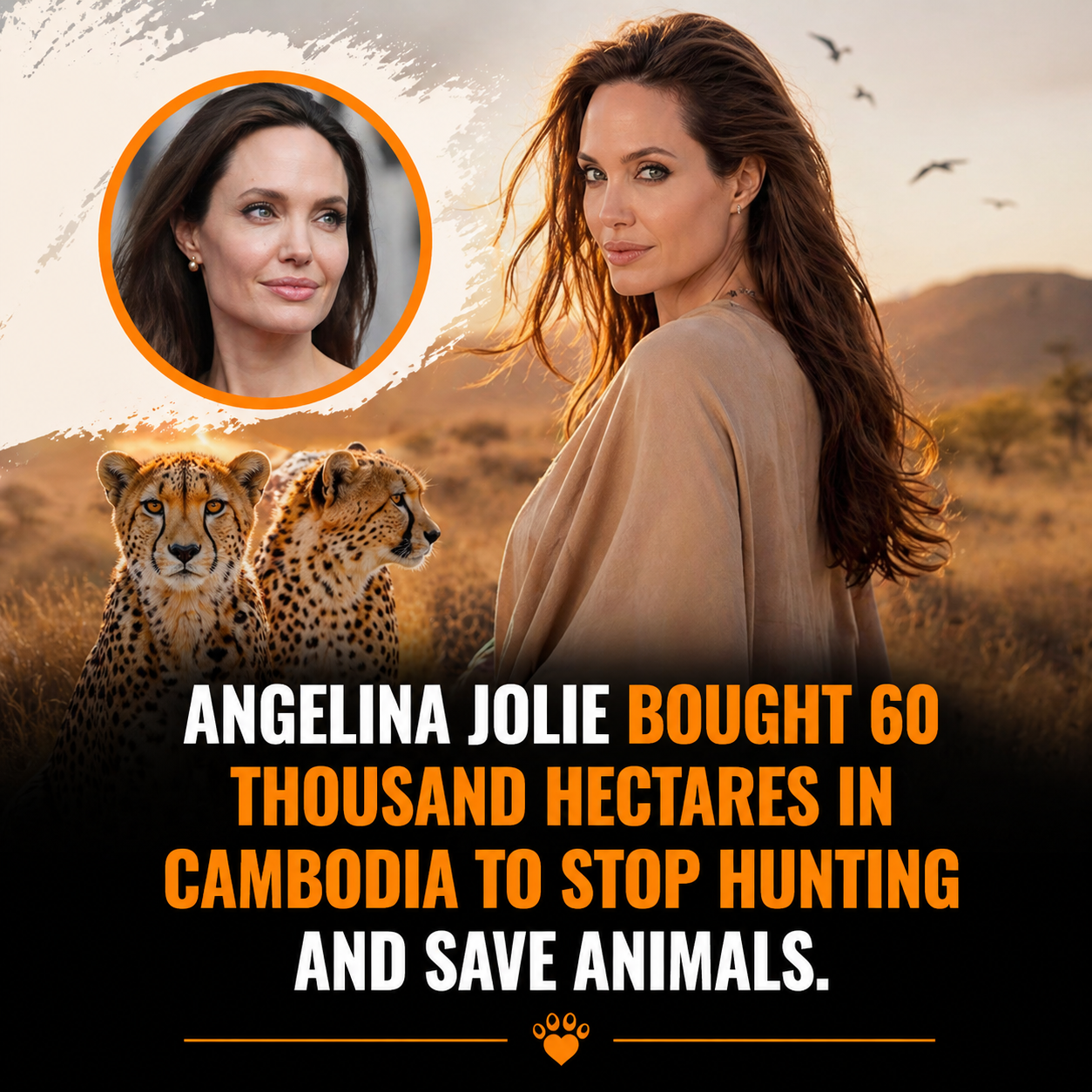
Angelina Jolie is known worldwide for her successful acting career, but she has also spent many years involved in humanitarian and environmental causes. One of her lesser-known efforts includes wildlife conservation work in Cambodia, a country she has supported for decades. Her connection to Cambodia began in the early 2000s and later grew into long-term environmental and community projects.
Reports over the years have highlighted that Jolie purchased a large area of land in northwestern Cambodia, estimated at around 60,000 hectares. This land was located in a region where forests and wildlife had faced pressure from illegal hunting, habitat destruction, and poverty. Like many forested regions in Southeast Asia, Cambodia has struggled with balancing environmental protection and the needs of rural communities who often depend on natural resources to survive.
Jolie’s goal was not simply to own land, but to protect it. The area became part of a wildlife reserve and conservation project designed to preserve forest habitat and provide a safer environment for native species. Cambodia is home to a wide range of wildlife, including elephants, gibbons, deer, birds, and many endangered animals whose habitats have shrunk over time due to deforestation and poaching.
One important aspect of the project was involving local people in the conservation effort. In many rural areas, hunting or cutting timber can become a source of income when few other opportunities exist. Conservation experts often note that protecting wildlife is most successful when nearby communities benefit as well. Jolie’s project reportedly included employing local residents to help guard and manage the land, creating alternative jobs connected to protection instead of exploitation.
This type of community-based conservation has become increasingly common around the world. Rather than treating local people as outsiders, it encourages them to become partners in environmental preservation. Jobs such as ranger work, forest monitoring, eco-tourism support, and land management can provide income while reducing the need for illegal hunting or logging. If done well, these programs can improve both livelihoods and biodiversity.
Jolie also established the Maddox Jolie-Pitt Foundation, named after her eldest son, who was adopted from Cambodia. The foundation has supported conservation, education, healthcare, and rural development initiatives in the country. Its work has included reforestation programs, agricultural assistance, and village support, showing that environmental protection is often linked to wider social development.
Cambodia remains one of the most biologically rich nations in the region, but it still faces challenges such as land clearing, wildlife trafficking, and climate pressures. Protected areas alone are not always enough. Long-term success usually depends on funding, enforcement, government cooperation, and strong local partnerships. Projects that combine these elements can make a meaningful difference.
Angelina Jolie’s conservation efforts in Cambodia stand out because they went beyond a one-time donation. By helping preserve a large natural area and supporting community involvement, she drew attention to the idea that wildlife protection and human opportunity can work together. While celebrities often support causes financially, long-term environmental engagement is less common and can have a more lasting impact.
Her work also helped bring international awareness to Cambodia’s natural beauty and environmental importance. It serves as an example of how global attention, local action, and conservation planning can come together to protect wildlife for future generations.