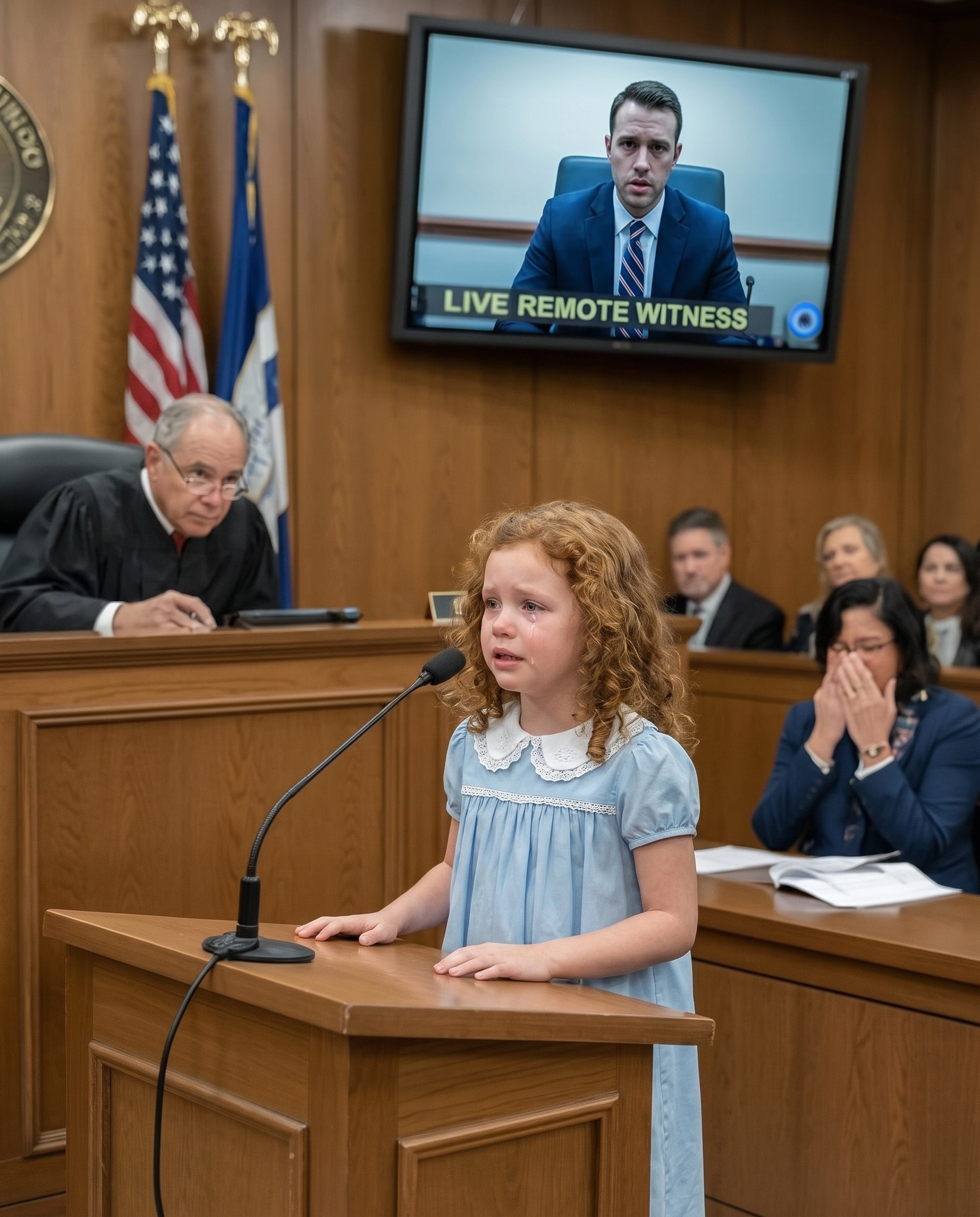
The first lie didn’t explode—it cracked quietly, almost unnoticed. But when the truth finally surfaced, it came in the hands of a young girl wearing a school uniform, clutching a tablet like a shield.
Inside the courtroom, her father sat with effortless confidence, certain his carefully crafted story would hold. Her mother looked exhausted, buried beneath accusations and explanations that no longer seemed convincing. Even the judge appeared ready to accept the version of events placed before him.
Then the girl spoke.
Months earlier, before she understood what it meant to distrust a parent, she had created a folder on her tablet and named it: “For When I Stop Believing You.”
Inside were recordings of late-night conversations, screenshots of messages, photographs of bank transfers her father had denied, and texts where affection slowly revealed itself as manipulation. She hadn’t collected them to destroy him. She had collected them because something inside her told her she might one day need proof.
That day had come.
One by one, the files appeared on the courtroom screen. His secret accounts. His threatening messages disguised as jokes. Conversations showing how he had tried to influence what she and her mother would say.
With every piece of evidence, another part of his carefully polished story collapsed.
Even his lawyer eventually stopped looking at him.
When the judge delivered the ruling, there was no dramatic outburst. The courtroom simply seemed to breathe again. Custody arrangements changed, visitation was restricted, and her mother sat quietly, tears gathering in her eyes.
But the real victory came weeks later.
It was an ordinary January afternoon when her mother noticed something strange—the house was peaceful.
No footsteps outside bedrooms. No drawers being searched. No doors being quietly opened to listen for conversations.
Her daughter was sitting at the kitchen table, struggling through math homework while a bracelet-making kit covered the surface around her.
Her mother asked whether she had stopped keeping watch.
The girl frowned for a moment before answering.
“I don’t think I need to watch everything anymore.”
Those words meant more than the judge’s ruling ever could.
Slowly, her daughter began becoming a child again. Court documents disappeared into a drawer. The tablet became what it should have been all along—a place for homework, funny videos, photos, and birthday invitations instead of a vault for evidence.
She kept the old folder, but buried it several screens away. She knew it was there, but she no longer needed to open it.
At night, she sometimes rested her hand on the family dog when he stirred in his sleep, learning what safety felt like and discovering that she deserved it too.
Then her father called again.
She answered.
She listened.
And instead of recording the conversation or saving another screenshot, she simply handed the phone to her mother.
For the first time, trusting someone felt less frightening than spending her life watching for the next lie.