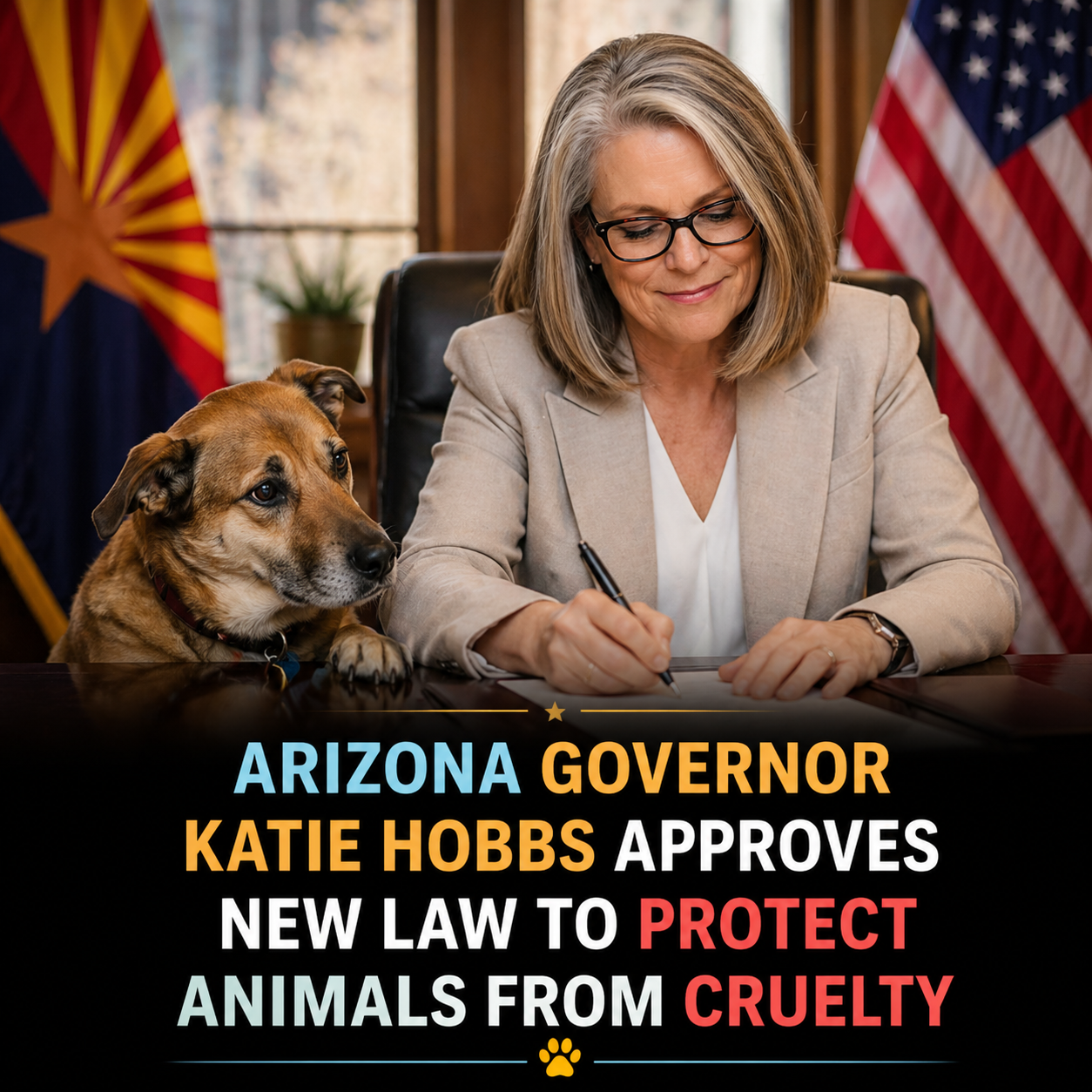
Arizona has taken a notable step in animal welfare with the signing of updated legislation aimed at strengthening protections against cruelty and neglect. Approved by Governor Katie Hobbs, the measure is part of a broader movement across the United States to modernize animal protection laws and close loopholes that critics say have weakened enforcement for years.
Animal welfare advocates have long argued that some older statutes did not fully address severe neglect, repeated abuse, or situations where animals suffered for extended periods before authorities could act. In many jurisdictions, vague definitions or limited penalties sometimes made it difficult for prosecutors and law enforcement to pursue serious cases effectively. Updated laws are often designed to clarify standards, improve accountability, and ensure that abuse is treated with appropriate seriousness.
According to supporters of the Arizona reform, one of the key goals is to provide clearer expectations for pet owners, animal caretakers, and investigators. Laws that clearly define neglect, abandonment, deprivation of food or water, unsafe shelter conditions, or intentional cruelty can help officers intervene sooner. Clearer legal language can also reduce confusion in court proceedings and strengthen the ability of prosecutors to pursue charges when evidence exists.
Animal neglect is one of the most common forms of cruelty reported to authorities. Unlike dramatic abuse cases that receive headlines, neglect often develops quietly over time. Animals may be left without veterinary care, proper nutrition, clean living conditions, or protection from extreme weather. Because these cases can be harder to detect early, advocates often emphasize the need for laws that support faster intervention before suffering becomes severe.
Arizona’s climate makes some welfare concerns especially important. High summer temperatures can create dangerous conditions for pets left outdoors without shade or water, or for animals left inside parked vehicles. Heat-related illness can develop rapidly, making timely action critical. Stronger legal tools may help local authorities respond more effectively when animals are placed at risk in extreme conditions.
Supporters also say stronger penalties matter because repeat offenders have sometimes avoided meaningful consequences. In some cases nationwide, individuals cited for neglect have later acquired more animals and repeated similar behavior. Laws that increase penalties, allow ownership restrictions after convictions, or create better tracking of offenders can reduce the chance of repeated harm.
Animal welfare legislation can also have broader community benefits. Researchers and law enforcement agencies have often noted links between animal cruelty and other forms of violence or neglect within households. While not every case is connected, early intervention in cruelty situations can sometimes reveal wider safety concerns affecting children, vulnerable adults, or public health conditions. For this reason, many policymakers view animal protection as part of community welfare, not a separate issue.
Another important part of modern animal welfare policy is public education. Laws alone do not solve every problem. Communities often need access to affordable veterinary care, spay and neuter services, pet food support programs, and information about responsible ownership. Some neglect cases stem from financial hardship or lack of knowledge rather than intentional harm. Balanced policy responses usually combine enforcement with prevention resources.
Across the United States, public attitudes toward animals have shifted significantly over recent decades. Pets are increasingly viewed as family members, and farm, wildlife, and shelter welfare issues receive greater public attention than in the past. This cultural change has led many states to revisit older laws and adopt tougher standards reflecting modern expectations of humane treatment.
For Arizona, supporters see the new legislation as more than a technical legal update. They view it as a signal that cruelty and severe neglect will be taken seriously and that animals deserve protection, care, and respect. While the long-term impact will depend on enforcement, training, and resources, clearer standards can improve consistency across agencies and courts.
As more states review their own statutes, Arizona’s action may serve as another example of how animal welfare policy continues to evolve. For advocates, the message is simple: preventing suffering is both a moral responsibility and a sign of a stronger, more compassionate society.