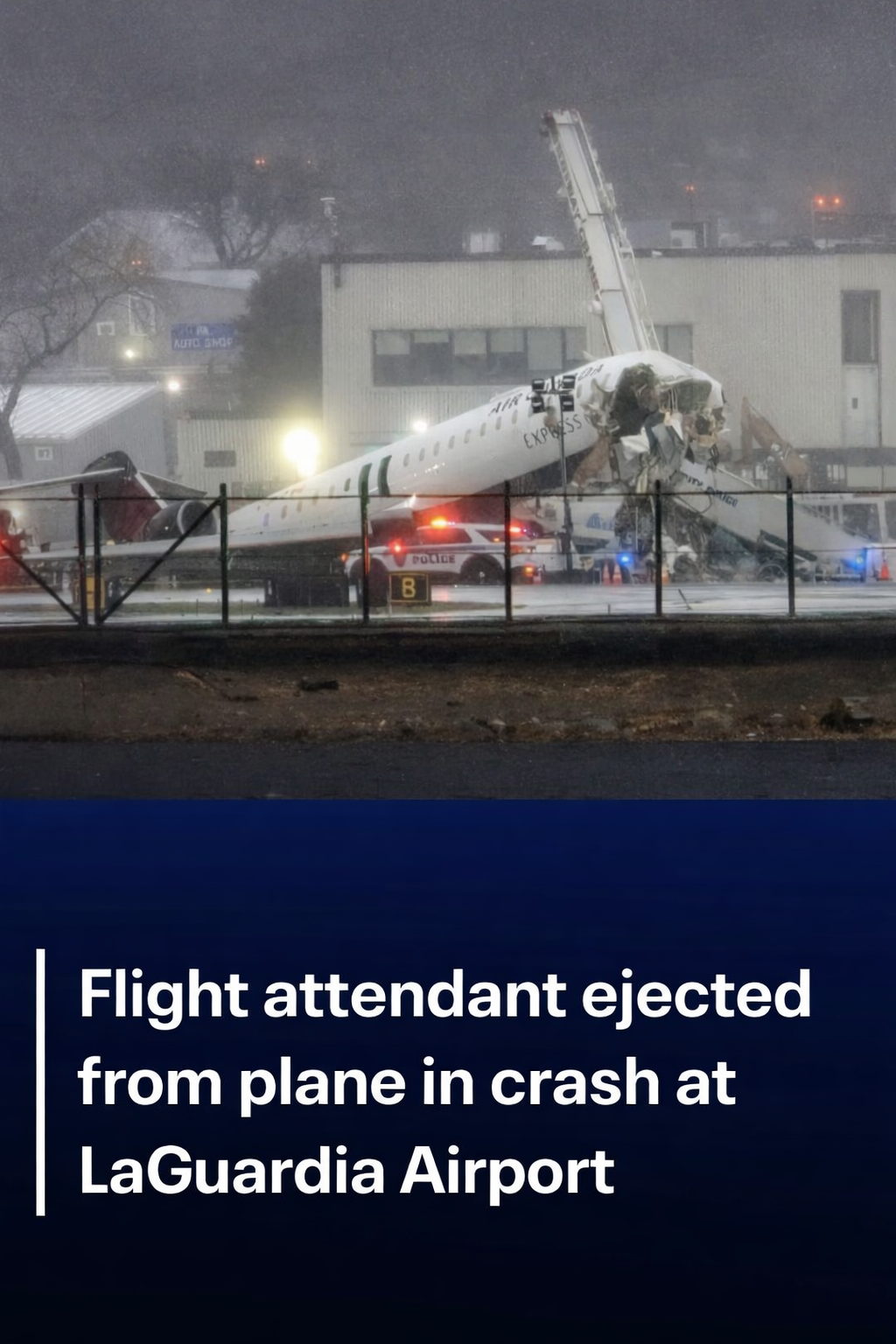
A tragic accident at LaGuardia Airport in New York has shocked the aviation world, not only because of the lives lost but also due to one extraordinary story of survival that has captured global attention.
On Sunday night, a regional passenger aircraft collided with a fire truck on the runway shortly after landing. The crash resulted in the deaths of both pilots and left dozens of passengers and crew members injured. Authorities have since launched a full investigation into what appears to be a serious breakdown in runway coordination and communication.
Amid the chaos and destruction, one detail stands out as both alarming and remarkable. A flight attendant, who was properly secured in her jump seat at the time of impact, was ejected from the aircraft during the crash.
According to early reports, the force of the collision was so intense that it tore sections of the aircraft apart. The flight attendant, still strapped into her seat, was thrown clear of the plane. Emergency responders later found her outside the wreckage, still buckled in. Despite the severity of the incident, she survived.
Medical officials confirmed that she sustained serious injuries, including fractures, but is expected to recover. Experts have described her survival as nothing short of extraordinary.
Aviation specialists explain that flight attendant jump seats are designed with enhanced safety features, including stronger harness systems compared to standard passenger seats. In this case, those features may have played a critical role in keeping her secured during the violent impact, potentially preventing even more severe injuries.
The crash itself is now under intense scrutiny. Preliminary findings suggest that both the aircraft and the fire truck were cleared to be on the same runway at the same time. The fire truck was reportedly responding to a separate situation when the collision occurred.
Investigators from the Federal Aviation Administration (FAA) and the National Transportation Safety Board (NTSB) are analyzing air traffic control communications, runway procedures, and operational protocols to determine exactly how this fatal error happened.
Audio recordings from the control tower are also being reviewed as part of the investigation. While officials have not released a full timeline yet, early indications point toward a critical lapse in coordination that allowed two active units onto the same runway.
This incident has once again raised serious concerns about runway safety, particularly at busy airports like LaGuardia, where tight scheduling and high traffic volumes leave little room for error. Aviation experts stress that while such accidents are rare, they highlight the importance of strict adherence to safety protocols and clear communication between all parties involved.
For many, however, the story of the surviving flight attendant has become a powerful symbol amid the tragedy. Being ejected from an aircraft during a crash would normally be considered unsurvivable, yet she lived — a testament to both modern safety design and sheer luck.
As investigations continue, families mourn the loss of the two pilots, and injured passengers begin their recovery. At the same time, the aviation industry is once again forced to confront difficult questions about safety systems and how to prevent such incidents in the future.
The LaGuardia crash will likely remain under investigation for months. But one thing is already clear: it is a stark reminder of how quickly routine operations can turn into disaster — and how, even in the worst moments, survival stories can emerge against all odds.