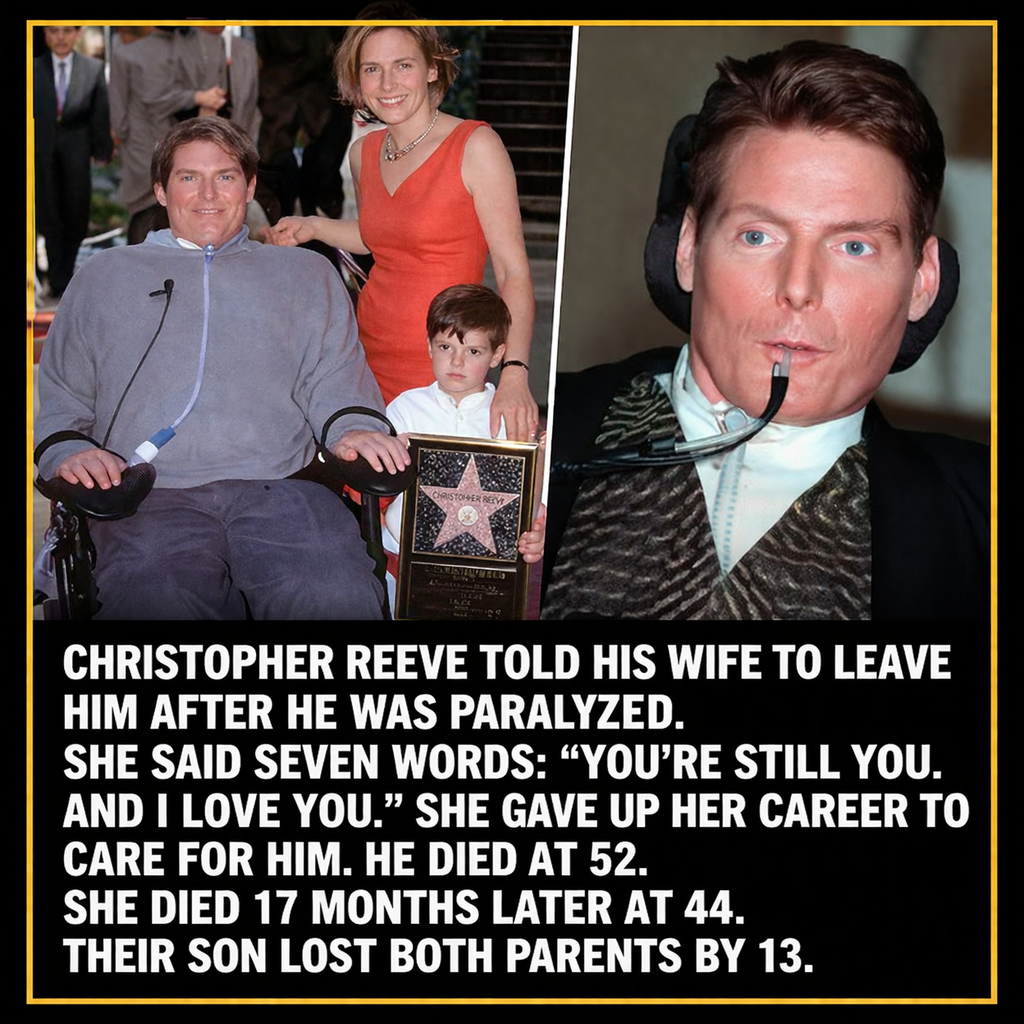
For millions of people around the world, Christopher Reeve was the face of strength and heroism, best known for portraying Superman on the big screen. But the greatest test of his life did not come from a film script—it came in 1995, in a moment that would change everything.
On May 27, 1995, Reeve was thrown from a horse during an equestrian competition in Virginia. The accident resulted in a severe spinal cord injury at the C-2 level, one of the highest and most critical points in the cervical spine. The injury left him paralyzed from the neck down and unable to breathe without the help of a ventilator. His condition required constant medical care and drastically altered every aspect of his life.
Fact Check: The Accident and Its Impact
The details of Reeve’s injury are well-documented and widely confirmed by medical reports and major news coverage at the time. A C-2 spinal cord injury is extremely serious, often affecting breathing and full-body movement. Reeve’s reliance on a ventilator and his paralysis are accurate and undisputed facts.
In the immediate aftermath, Reeve faced intense emotional and psychological struggles. He later spoke openly about moments of despair, including thoughts of not wanting to continue living under such conditions. These reflections have been documented in interviews and his autobiography, making this part of the story credible.
The Role of Dana Reeve
Amid this life-altering crisis, Dana Reeve’s response became one of the most powerful elements of the story. When Christopher expressed doubts about continuing, Dana reassured him with words that have since become widely quoted: “You’re still you. And I love you.”
While the exact wording has been slightly paraphrased in different retellings, the essence of her support is well-supported by Reeve’s own accounts. Her commitment was not symbolic—it was lived every day. Dana became his primary caregiver while also raising their young son, Will.
She did step back from many aspects of her acting career, though it is important to note she did not entirely abandon it. Instead, she balanced caregiving with selective professional work, all while advocating for her husband and others in similar situations.
Turning Tragedy Into Purpose
Rather than retreating from public life, Christopher and Dana transformed their personal struggle into a mission. They became leading advocates for spinal cord injury research and disability rights.
Through the Christopher & Dana Reeve Foundation, they helped raise millions of dollars to fund scientific research and improve the quality of life for individuals living with paralysis. Christopher also used his platform to speak before policymakers and the public, pushing for advancements in medical science and accessibility.
Their work brought hope to countless families facing similar challenges, proving that even in the face of profound loss, purpose can still be found.
Loss and Legacy
Christopher Reeve passed away on October 10, 2004, at the age of 52, due to complications related to his condition. This is a confirmed and widely reported fact.
In a tragic turn, Dana Reeve was diagnosed with lung cancer despite being a non-smoker. She died on March 6, 2006, at the age of 44. Her diagnosis and passing were also widely covered and remain a poignant reminder that life’s hardships can come without warning or explanation.
Their son, Will, was just 13 years old when he lost both parents within a span of less than two years—a heartbreaking reality that underscores the human cost behind even the most inspiring stories.
A Story Beyond Tragedy
While the Reeve family’s story is undeniably marked by loss, it is also defined by resilience, love, and unwavering commitment. Christopher’s journey showed that strength is not just physical—it is the ability to endure, adapt, and continue. Dana’s devotion demonstrated the power of unconditional love in its purest form.
Their legacy lives on not only through the foundation they built but also through the example they set. Together, they redefined what it means to be strong—not as invincible heroes, but as human beings who refused to give up on each other, even when life gave them every reason to break.