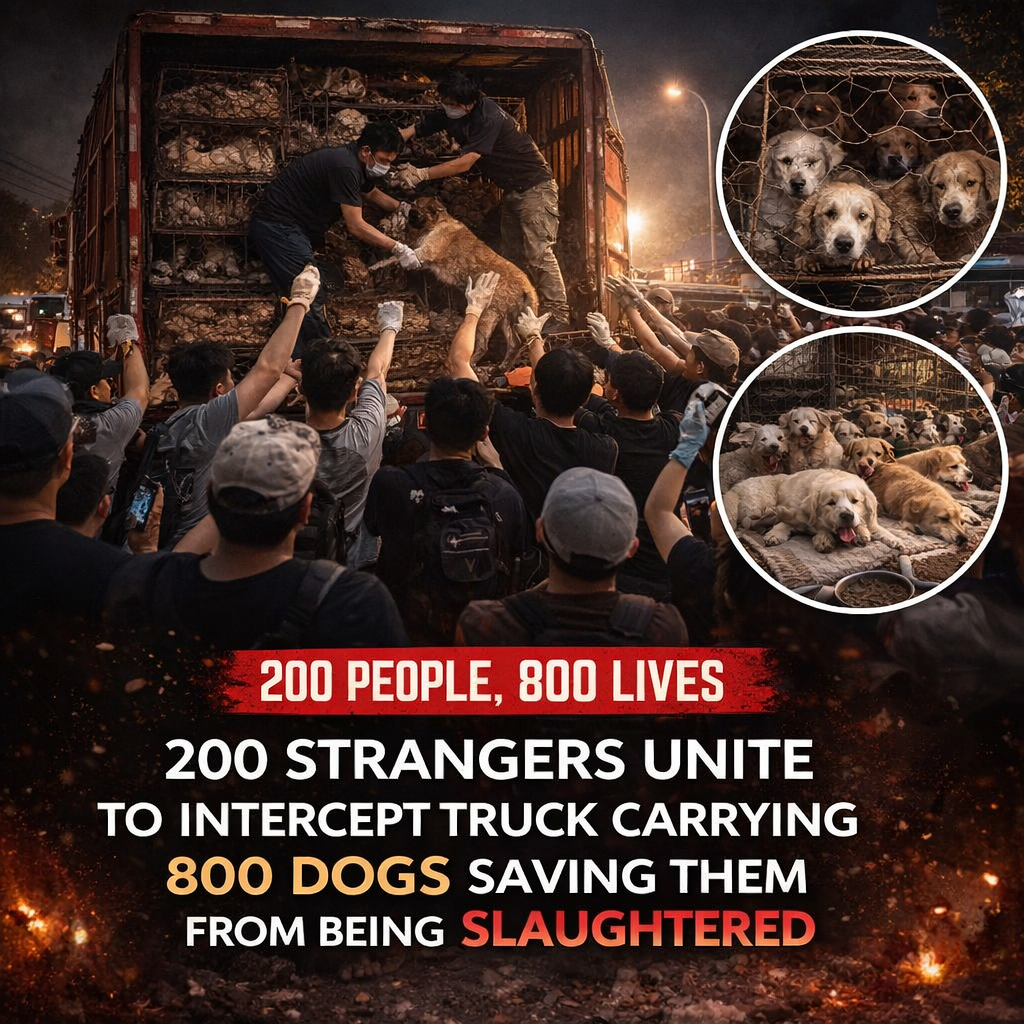
welfare incidents involving the transport of dogs for slaughter have drawn global attention in recent years, particularly in parts of East Asia where the practice still exists in some regions. One widely reported type of incident involves trucks carrying large numbers of dogs under extremely poor conditions—tight cages, lack of food and water, and long journeys that can leave many animals weak or injured. While such situations highlight ongoing challenges, they also reveal how intervention and collective action can change outcomes.
In this case, a truck transporting hundreds of dogs was stopped before reaching its destination. The animals were reportedly confined in stacked wire cages, limiting movement and airflow. Conditions like these are known to create serious welfare risks. Veterinary experts note that overcrowding, dehydration, and prolonged stress can quickly lead to illness or death during transport.
What made this situation different was the intervention of an individual who physically blocked the truck’s path, refusing to let it continue. This act drew attention and quickly escalated into a larger response. Within hours, members of the public gathered at the scene. Vehicles lined the roadside, and people worked together to provide immediate relief to the animals—offering water, food, and basic care through the cages while authorities were contacted.
Such rapid mobilization is not uncommon in highly publicized animal welfare cases in China. Over the past decade, local activists and volunteers have increasingly organized rescues, often using social media to spread awareness and coordinate support. These grassroots efforts are frequently supported by international organizations such as Humane Society International, which has been involved in multiple dog rescue and rehabilitation operations across the region.
After a prolonged standoff, the transporter relinquished the animals. This allowed rescue teams and animal protection groups to step in and take custody of the dogs. The next phase—rehabilitation—was critical. Many of the animals required immediate veterinary attention due to dehydration, malnutrition, infections, or injuries sustained during transport.
Rescued dogs are typically moved to temporary care facilities where they receive medical treatment, proper nutrition, and rest. Quarantine is often necessary to prevent the spread of disease, especially when animals come from unknown or crowded conditions. Behavioral recovery is another important aspect. Dogs that have experienced prolonged stress or trauma may initially show fear or withdrawal, requiring time and patient handling to rebuild trust.
Despite the difficult journey, many of the rescued dogs survived and gradually began to recover. Animal care workers often report noticeable behavioral changes once the immediate threat is removed. Dogs that were previously anxious or unresponsive may begin to relax, eat regularly, and interact with caregivers. While this shift can appear sudden, it reflects the removal of stressors and the presence of a safer, more stable environment.
Adoption is usually the final goal in such rescue operations. Once the dogs are medically cleared and assessed for temperament, efforts are made to place them in permanent homes. Some are adopted locally, while others are transferred internationally through established rescue networks. Each successful adoption represents not only a saved life but also a long-term commitment to animal welfare.
It is important to note that not all animals survive these rescues. The conditions during transport can be severe, and some dogs may be too weak by the time help arrives. However, even partial survival highlights the impact of timely intervention.
This incident underscores a broader reality: meaningful change often begins with individual action but depends on collective support. The decision of one person to intervene created an opportunity for hundreds of others to contribute. Together, they transformed a situation of suffering into one of rescue and recovery.
While challenges in animal welfare remain, cases like this demonstrate that awareness, cooperation, and persistence can lead to tangible outcomes. They serve as reminders that coordinated human action—whether local or global—can directly improve the lives of vulnerable animals.