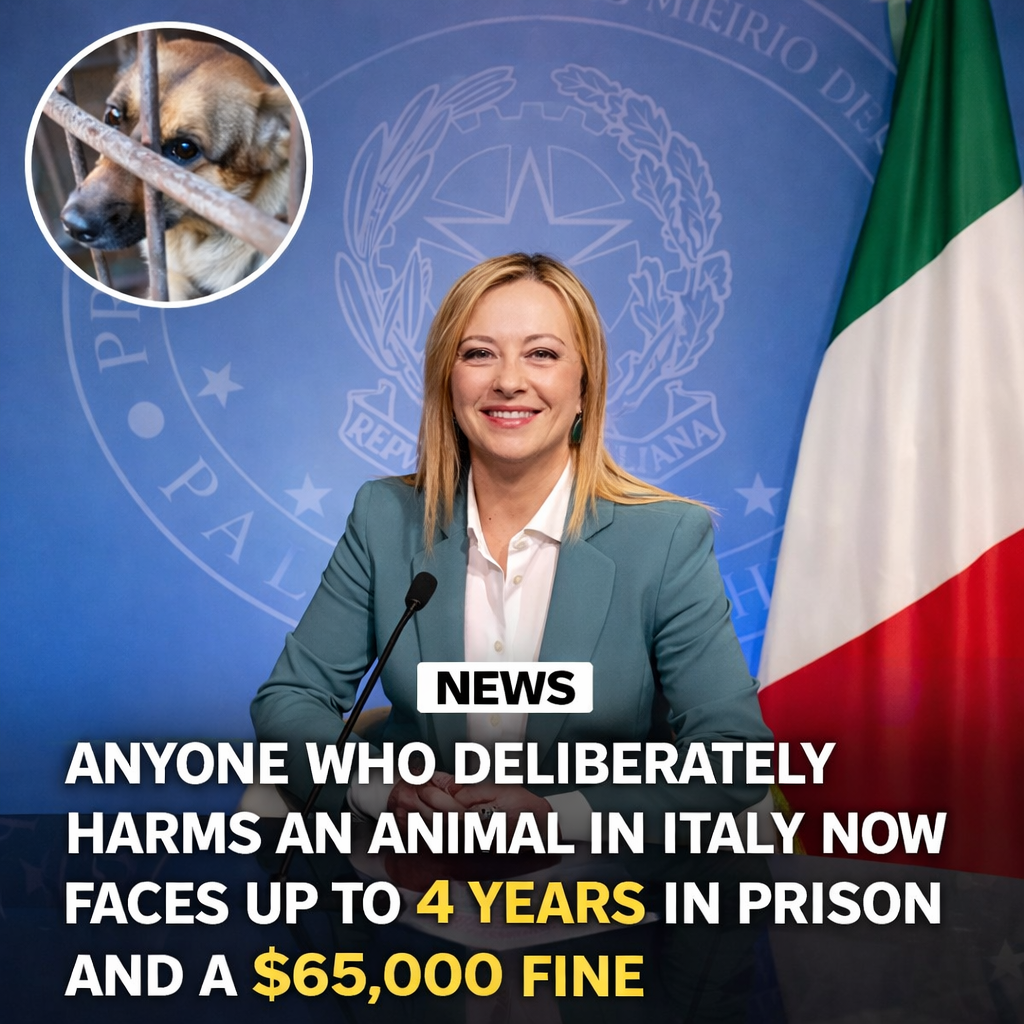
Italy has taken a major step forward in animal welfare by introducing one of the strictest animal protection laws in Europe. Known as the “Brambilla Law,” this legislation significantly strengthens penalties for animal abuse and reflects a broader shift in how animals are viewed under the legal system.
The law was passed unanimously by the Italian Senate and came into force on July 1, 2025. Its approval marked a rare moment of political unity, highlighting the widespread support for stronger protections for animals across the country. The legislation introduces tougher punishments and new legal definitions that reshape the treatment of animal-related crimes.
Under the new rules, individuals who deliberately kill or torture animals can face up to four years in prison and fines reaching €60,000. These penalties represent a significant increase compared to previous laws, where punishments were often criticized as too lenient to deter serious abuse. By doubling the potential consequences, lawmakers aim to send a clear message that acts of cruelty toward animals will be treated with greater seriousness.
One of the most notable aspects of the law is its recognition of animals as sentient beings with their own rights. Traditionally, many legal systems have treated animals primarily as property, meaning that harm to them was often considered an offense against the owner rather than the animal itself. With this reform, Italy moves toward a framework that acknowledges animals as living beings capable of experiencing pain and suffering, thereby deserving direct legal protection.
The legislation also introduces several practical measures to improve animal welfare. Among these is a nationwide ban on permanently chaining dogs outdoors, a practice long criticized by animal rights advocates for causing physical and psychological harm. The law also increases penalties for organizing or participating in animal fights, which are often linked to organized crime and illegal betting activities.
In addition, the new rules target illegal puppy trafficking, a widespread issue in parts of Europe. Criminal networks often transport young animals across borders in poor conditions to sell them for profit. By strengthening enforcement and increasing penalties, the law aims to disrupt these operations and improve the treatment of animals involved in such practices.
Another important provision concerns the context in which abuse occurs. If acts of cruelty are filmed and shared online, or carried out in front of children, the penalties become even more severe. This reflects growing concern about the social impact of such behavior, particularly in the digital age where harmful content can spread rapidly and normalize violence.
Italy’s approach also signals a broader legal shift. Crimes against animals are increasingly being treated as offenses against the animals themselves, rather than merely violations of public morality or human sensibilities. This distinction is important because it places the focus directly on the harm experienced by the animal, rather than on how the act affects people.
The introduction of the Brambilla Law positions Italy among the leading countries in Europe when it comes to animal protection. While other nations have taken steps to improve welfare standards, Italy’s comprehensive approach—combining stricter penalties, legal recognition of animal rights, and targeted enforcement measures—sets a strong example.
As awareness of animal welfare continues to grow globally, laws like this reflect changing attitudes in society. The recognition that animals are sentient beings deserving of protection is becoming more widely accepted, and legal systems are gradually adapting to reflect that understanding.
Overall, Italy’s new legislation represents a significant milestone. By strengthening penalties, expanding protections, and redefining the legal status of animals, the country has taken a decisive step toward ensuring that cruelty is met with serious consequences and that animals are afforded greater respect under the law.