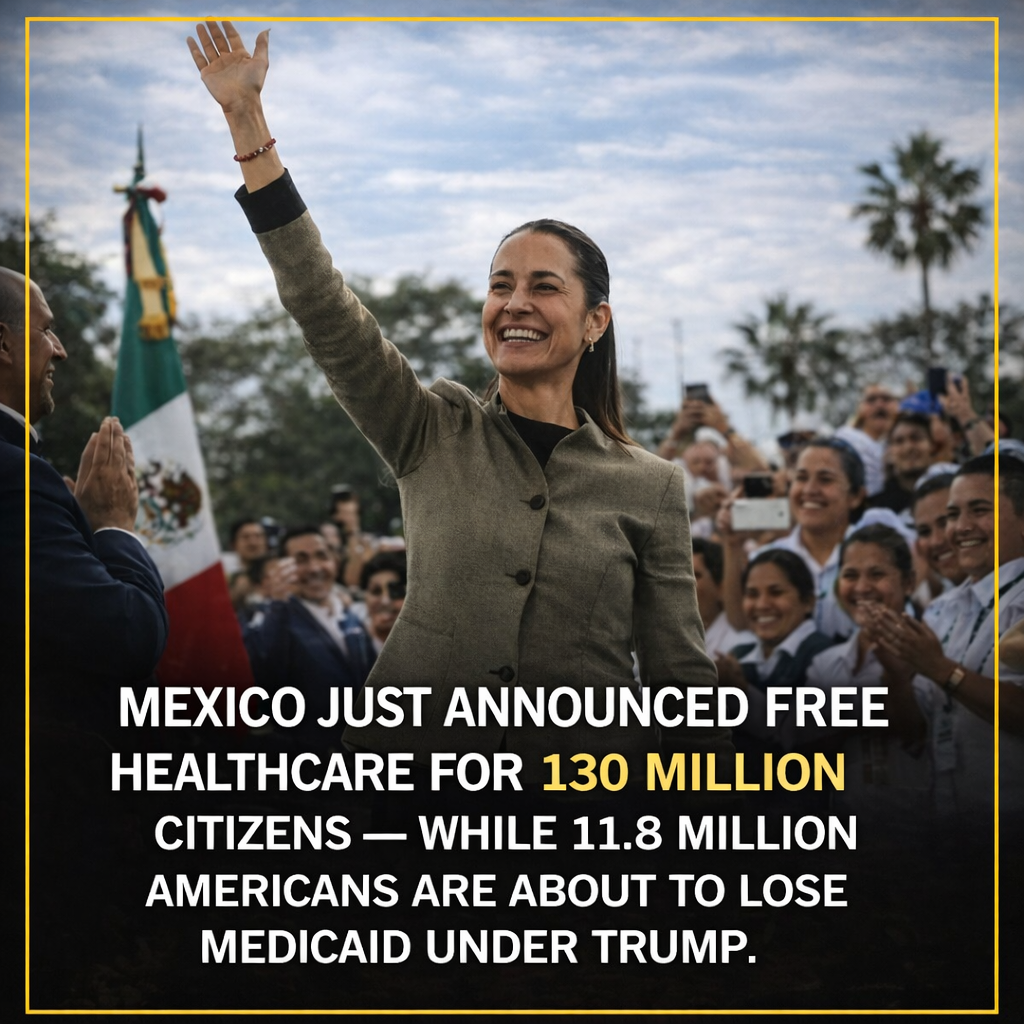
A major healthcare reform in Mexico is drawing global attention after President Claudia Sheinbaum announced a plan to move toward universal access to public healthcare. The initiative aims to allow all citizens—more than 130 million people—to receive medical treatment at any public health institution, regardless of employment status or insurance coverage. Supporters are calling it a historic step, while critics warn of serious challenges ahead.
At the heart of the reform is the creation of a unified public health system. Currently, Mexico’s healthcare is divided across several major institutions, including IMSS, ISSSTE, and IMSS-Bienestar. Each system traditionally serves different groups—private-sector workers, government employees, and uninsured populations—resulting in fragmentation and unequal access.
The new policy seeks to eliminate these divisions by integrating the systems into a single, more flexible network. Under the plan, patients would no longer be restricted to specific hospitals based on their employment status. Instead, they could seek care at any participating public facility, theoretically improving access and reducing inequality in treatment availability.
The rollout of the program is expected to occur in phases. Registration for a new Universal Health Credential begins April 13, initially targeting older citizens, particularly those aged 85 and above. This phased approach is intended to test the system’s capacity and ensure smoother implementation. Full integration of services is scheduled to begin on January 1, 2027, with specialized medical services—such as advanced treatments and complex procedures—expected to follow later that year.
The scope of coverage is broad. The government has indicated that essential and high-impact medical services will be included, such as emergency care, hospital admissions, treatment for chronic diseases like cancer and kidney disease, as well as care for heart attacks, strokes, and high-risk pregnancies. Vaccination programs are also part of the package, reinforcing preventive healthcare efforts.
However, despite the ambitious vision, the plan faces notable criticism within Mexico. One of the main concerns is the current state of the healthcare system itself. Public hospitals in many regions are already under pressure, with reports of medicine shortages, limited medical supplies, and overcrowded facilities. Critics argue that expanding access without first addressing these structural issues could worsen existing problems rather than solve them.
Financial sustainability is another key question. While the government has allocated approximately $198.8 million for the registration phase, the long-term costs of maintaining a universal healthcare system for such a large population are expected to be significantly higher. Managing resources efficiently and ensuring consistent funding will be critical to the program’s success.
International observers have also weighed in. Wendell Potter, a former U.S. insurance executive turned healthcare reform advocate, described Mexico’s move as both “inspiring and frustrating.” His remarks reflect a broader comparison between Mexico’s push toward universal coverage and ongoing debates in countries like the United States, where similar reforms have faced decades of political disagreement.
Ultimately, Mexico’s universal healthcare initiative represents a bold attempt to transform how medical services are delivered across the country. If successful, it could significantly reduce inequality in access to care and improve health outcomes for millions. However, its effectiveness will depend heavily on execution—particularly the government’s ability to strengthen infrastructure, ensure adequate staffing, and maintain a steady supply of medicines.
As the rollout begins, the world will be watching closely. Mexico’s experience may offer valuable lessons for other nations grappling with the challenge of providing affordable, accessible healthcare to all citizens.