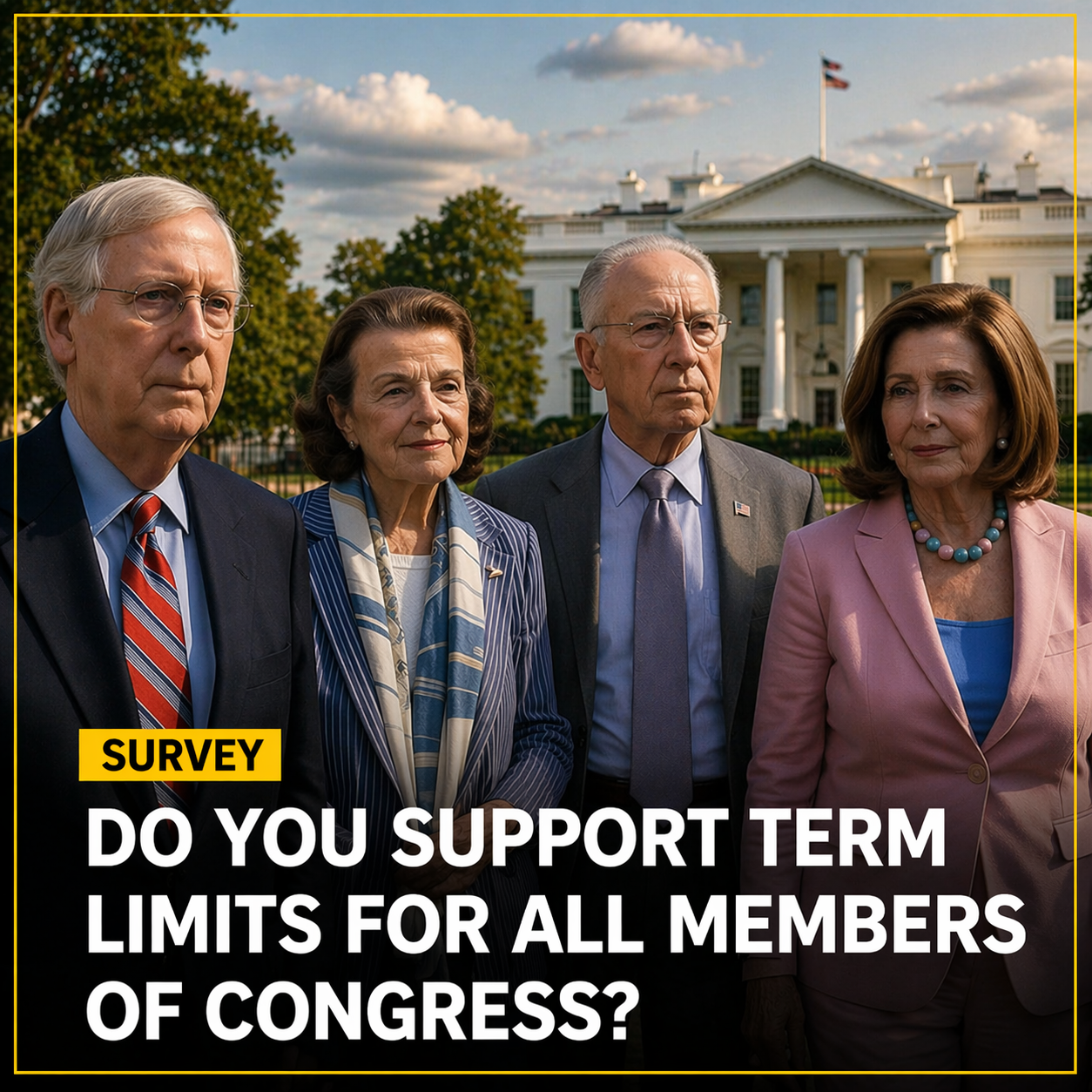
The question of whether there should be term limits for members of the U.S. Congress has remained one of the most persistent and widely debated issues in American politics. It cuts across party lines, drawing support from both conservatives and liberals, yet meaningful reform has never materialized. At the center of this debate is a simple but powerful concern: how long is too long for someone to hold elected office?
Several prominent figures highlight the reality of long-term service in Congress. Mitch McConnell served in the Senate for four decades, shaping policy and party strategy for generations. Chuck Grassley, now in his 90s, continues to hold office after decades of public service. Nancy Pelosi has been a member of Congress since 1987 and remains one of the most influential political figures in the country. Meanwhile, Dianne Feinstein served until her death at age 90 while still in office. These are not isolated cases—they reflect a broader pattern in a system that places no formal limits on congressional tenure.
Unlike the presidency, which is restricted by the 22nd Amendment to the United States Constitution, members of Congress can serve indefinitely as long as they continue to win elections. The idea behind this system is rooted in democratic choice: voters, not legal limits, decide how long a representative or senator should serve. In theory, if constituents are dissatisfied, they can vote their leaders out.
However, critics argue that this ideal does not always play out in practice. Incumbents often benefit from name recognition, fundraising advantages, and established political networks, making it difficult for challengers to compete. Over time, this can create a system where long-serving politicians accumulate significant influence, raising concerns about stagnation, lack of fresh perspectives, and the concentration of power.
Public opinion tends to favor change. Multiple surveys over the years have shown that a majority of Americans—across both major political parties—support the idea of term limits for Congress. For many, the appeal lies in the promise of regular turnover, new ideas, and a system that feels more responsive to changing public needs.
Yet despite this widespread support, term limit proposals rarely gain traction in Congress itself. The reason is straightforward: any legislation imposing limits would directly affect the careers of the very lawmakers who must vote on it. This creates a clear conflict of interest. Lawmakers are being asked to voluntarily restrict their own power and tenure—something that, historically, has proven difficult to achieve.
Supporters of term limits argue that reform could reduce careerism in politics and encourage representatives to focus more on long-term national interests rather than reelection strategies. They believe it could also open the door for more diverse candidates and reduce the influence of entrenched political networks.
Opponents, however, warn of potential downsides. Experience and institutional knowledge can be valuable in navigating complex legislation and governance. Limiting terms could lead to a loss of expertise and increase reliance on unelected staff or lobbyists who remain in Washington longer than elected officials. There is also concern that frequent turnover could weaken Congress as an institution, making it less effective in balancing other branches of government.
Another practical challenge is constitutional. Imposing term limits on Congress would likely require a constitutional amendment—a difficult and lengthy process that demands broad political consensus at both the federal and state levels. This adds another layer of complexity to an already contentious issue.
Ultimately, the debate over congressional term limits reflects a deeper tension within democracy itself: the balance between stability and change, experience and renewal, voter choice and structural reform. While the idea continues to resonate with the public, the path to implementation remains uncertain.
Until that changes, the system will continue to rely on elections alone to determine how long someone serves in Congress. Whether that is enough—or whether structural limits are needed—remains one of the most enduring questions in American governance.