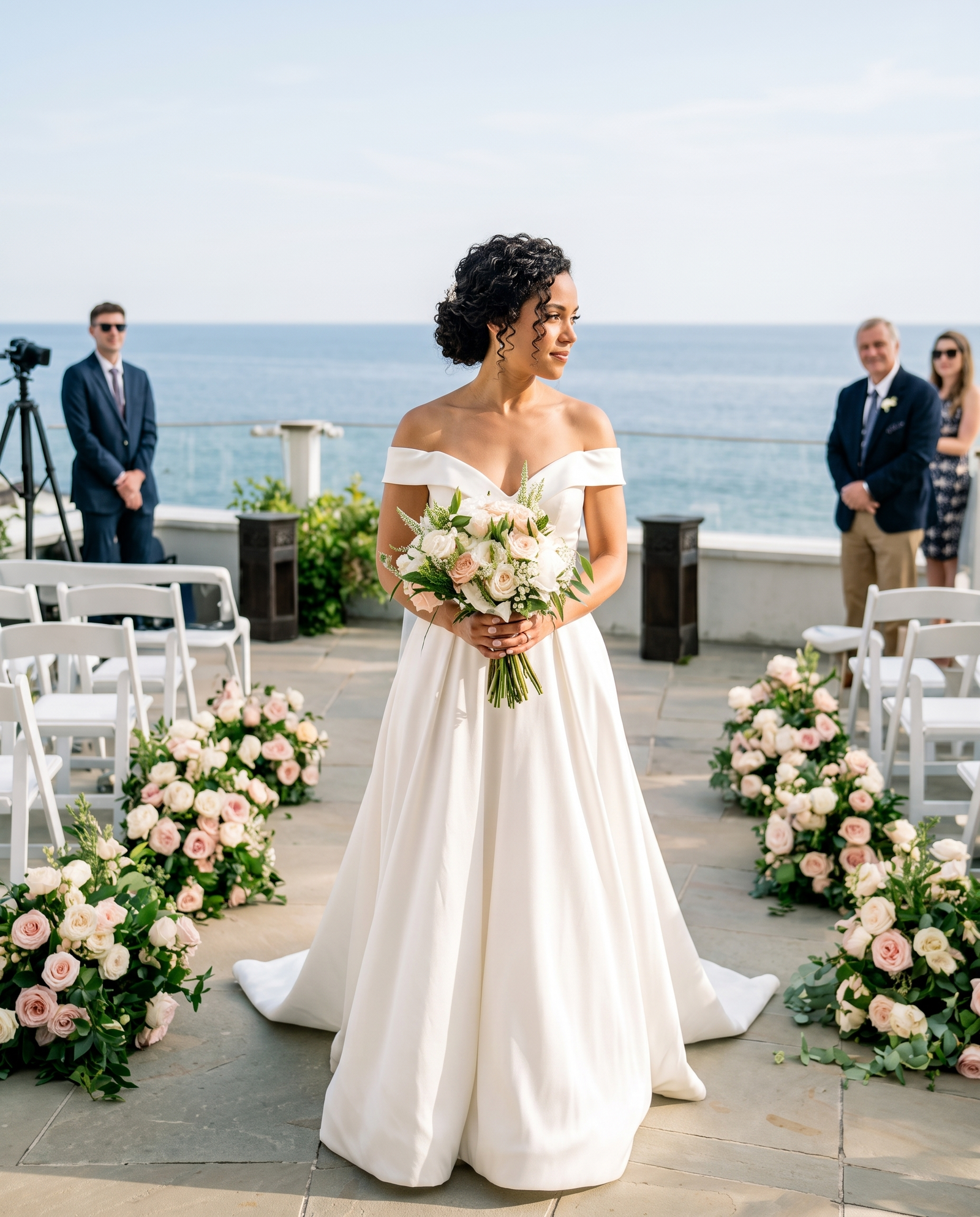
The envelope arrived like a sentence she had already been dreading. Inside were six words written in her mother’s unmistakable handwriting:
WE WILL NOT COME. NOT TO THIS.
She had spent her career designing buildings strong enough to survive earthquakes, but nothing had prepared her for the collapse happening inside her. Her wedding was supposed to be a celebration. Instead, her parents’ refusal made it feel like a final judgment—not only on the ceremony, but on her as their daughter.
She ran her fingers over the return address, searching for some explanation that could make the rejection hurt less. There was none. No engineering formula could explain why love could come with conditions, or why people connected by blood could sometimes feel farther away than strangers.
Her fiancée didn’t try to fix it.
She simply sat beside her on the floor, held her hand, and let her grieve.
Then the people she had chosen began showing up.
Friends rearranged flights and schedules so she would never have to look toward an empty seat and feel alone. Her future mother-in-law took care of the flowers, not because she felt sorry for her, but because she wanted to celebrate the family her son was creating. And when her old graduate-school mentor called and offered to walk her down the aisle, her voice trembled as she admitted she had never expected to be asked to fill such an important place in someone’s life.
On the Malibu cliffs, the absence of her parents was impossible to ignore.
But it wasn’t the only thing she could hear.
There was laughter carried by the ocean breeze. Friends were whispering excitedly behind her. There were wildflowers gathered from places that had once felt like home. People were standing beside her who had chosen her without conditions.
When the officiant asked who would give her away, there was no single parent stepping forward.
Instead, friends, mentors, and in-laws answered together.
It wasn’t permission they were giving her.
It was a promise: You will never have to stand alone.
For one brief moment, she felt the familiar ache of her mother’s silence. Then her fiancée squeezed her hand, and the ache gave way to laughter, tears, and the steady warmth of being loved.
As she slipped the ring onto her partner’s finger, she realized something with the clarity of an engineer.
Not every structure is meant to be repaired.
Some bridges develop cracks because they were never strong enough to carry the weight placed upon them. Looking back, she could finally recognize the warning signs—jokes that weren’t really jokes, silences that carried judgment, affection that disappeared whenever she refused to become the person her parents wanted.
Letting that bridge fall wasn’t giving up.
It was finally refusing to carry it alone.
Later that night, barefoot in their kitchen with her veil tossed over a chair, she unfolded her mother’s letter one final time.
She read those six words.
Then she dropped the paper into the trash.
Not because she had forgotten the pain.
Because she had finally learned the difference between forgiveness and allowing someone to keep hurting her.
Around her, her chosen family washed dishes, laughed about the wedding, and filled the house with the kind of noise she had once believed only blood relatives could create.
She no longer needed to be the perfect daughter.
She no longer needed her parents’ approval to know she was worthy of love.
She was simply herself—and for the first time, that was enough.