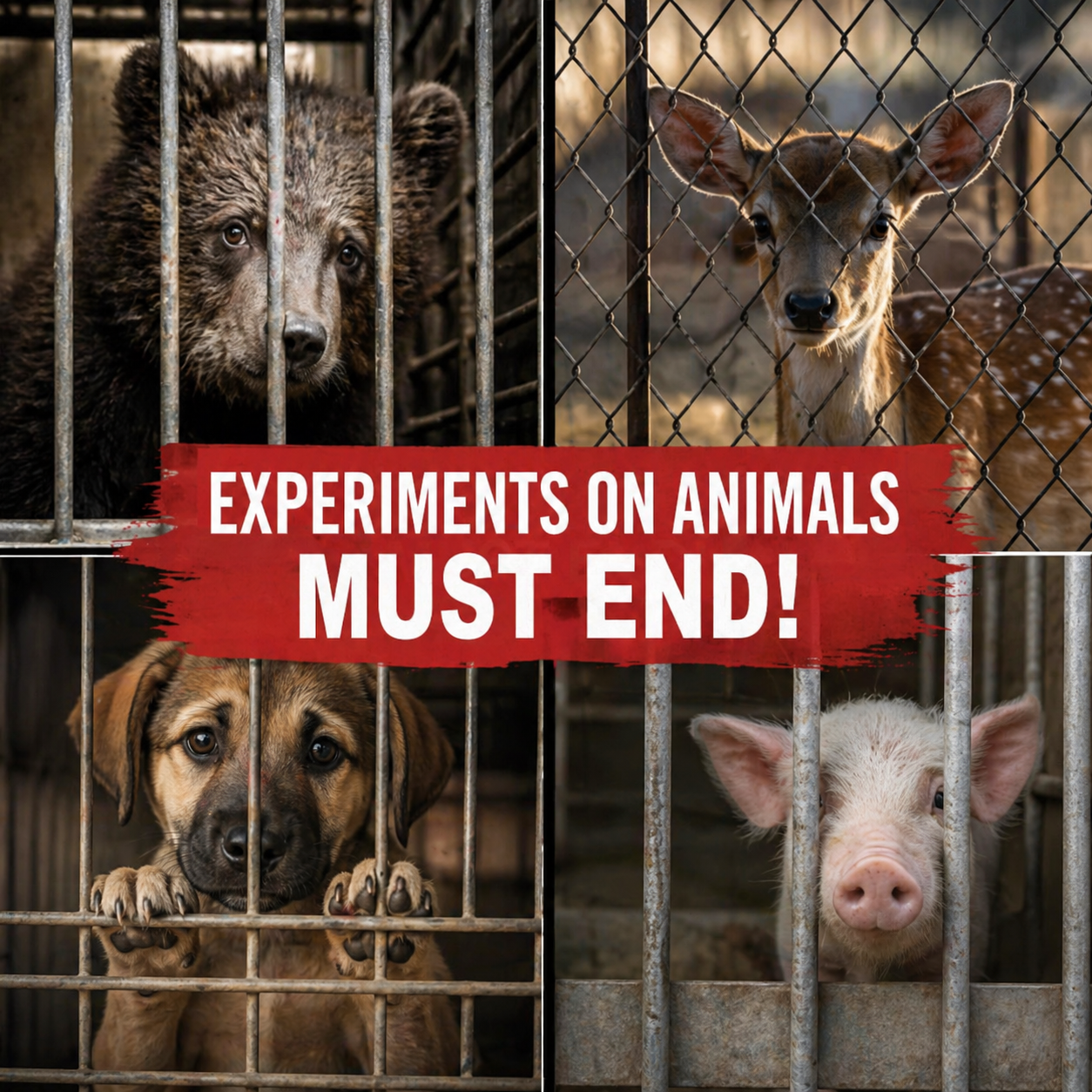
Animal testing has long been used in medical research, product safety checks, and scientific studies. For decades, animals such as mice, rats, rabbits, dogs, and monkeys have been used to test chemicals, drugs, and procedures before they reach human trials. Supporters have argued that animal studies helped advance science in the past. However, growing evidence and new technologies have led many researchers, lawmakers, and advocacy groups to question whether animal testing should continue at the same scale.
One of the biggest criticisms of animal testing is that results in animals often do not accurately predict what will happen in humans. Humans and animals can react differently to the same substance because of major biological differences. A drug that appears safe or effective in mice may fail in human clinical trials, while treatments that might help humans can sometimes be discarded after poor animal results. This has raised concerns about the scientific reliability of relying heavily on animal models.
Several studies have shown that a high percentage of drugs that pass animal tests still fail during human trials. Common reasons include lack of effectiveness or unexpected side effects. This means years of research and large amounts of money can be spent on methods that do not always translate into real human benefit. Critics describe this as inefficient and outdated when newer options are increasingly available.
Ethical concerns are another major reason the debate has intensified. Millions of animals worldwide are used in laboratories each year. Some are subjected to painful procedures, confinement, stress, or euthanasia after testing ends. While many countries have animal welfare rules requiring oversight and efforts to reduce suffering, opponents argue that causing harm to sentient animals for uncertain scientific benefit is no longer justifiable when alternatives exist.
Modern science is rapidly creating those alternatives. Human cell-based testing allows researchers to study disease and drug responses using real human biology in laboratory settings. Organoids, which are miniature lab-grown versions of organs such as the liver, brain, or intestine, can mimic some functions of the human body. These models may provide more relevant data than animal systems for certain questions.
Another promising field is “organ-on-a-chip” technology. These small devices contain human cells arranged to simulate how organs function. Scientists can observe how drugs move through tissues, how inflammation develops, or how toxic substances affect the body. Because these systems use human cells, they may better reflect real human responses than many animal tests.
Computer modeling and artificial intelligence are also transforming research. Advanced software can predict toxicity, drug interactions, and biological behavior using existing datasets. Instead of repeating animal experiments, scientists can use digital tools to screen thousands of compounds faster and at lower cost. These methods are especially useful in early-stage research.
Governments and regulators are beginning to respond. In recent years, some countries have updated policies to reduce mandatory animal testing in certain industries, especially cosmetics. In the United States, reforms have encouraged regulators to consider non-animal methods in drug development where scientifically appropriate. The European Union has also been active in promoting alternatives and limiting animal testing in some areas.
Still, replacing animal testing entirely is complex. Some areas of biomedical research still rely on whole-body systems to study immune responses, long-term disease progression, or interactions among organs. Many experts believe the transition will happen gradually rather than instantly. The goal for many scientists is not to stop progress, but to use the most accurate and humane tools available.
The principle known as the “3Rs” has guided reform for years: Replace animals where possible, Reduce the number used, and Refine methods to minimize suffering. Today, growing numbers of researchers argue that science should move beyond this framework toward replacement whenever practical.
The future of research is increasingly focused on human-relevant methods that are faster, more ethical, and potentially more predictive. As technology improves, the case for reducing dependence on animal testing continues to grow. For many experts, the question is no longer whether change is possible, but how quickly it can happen.