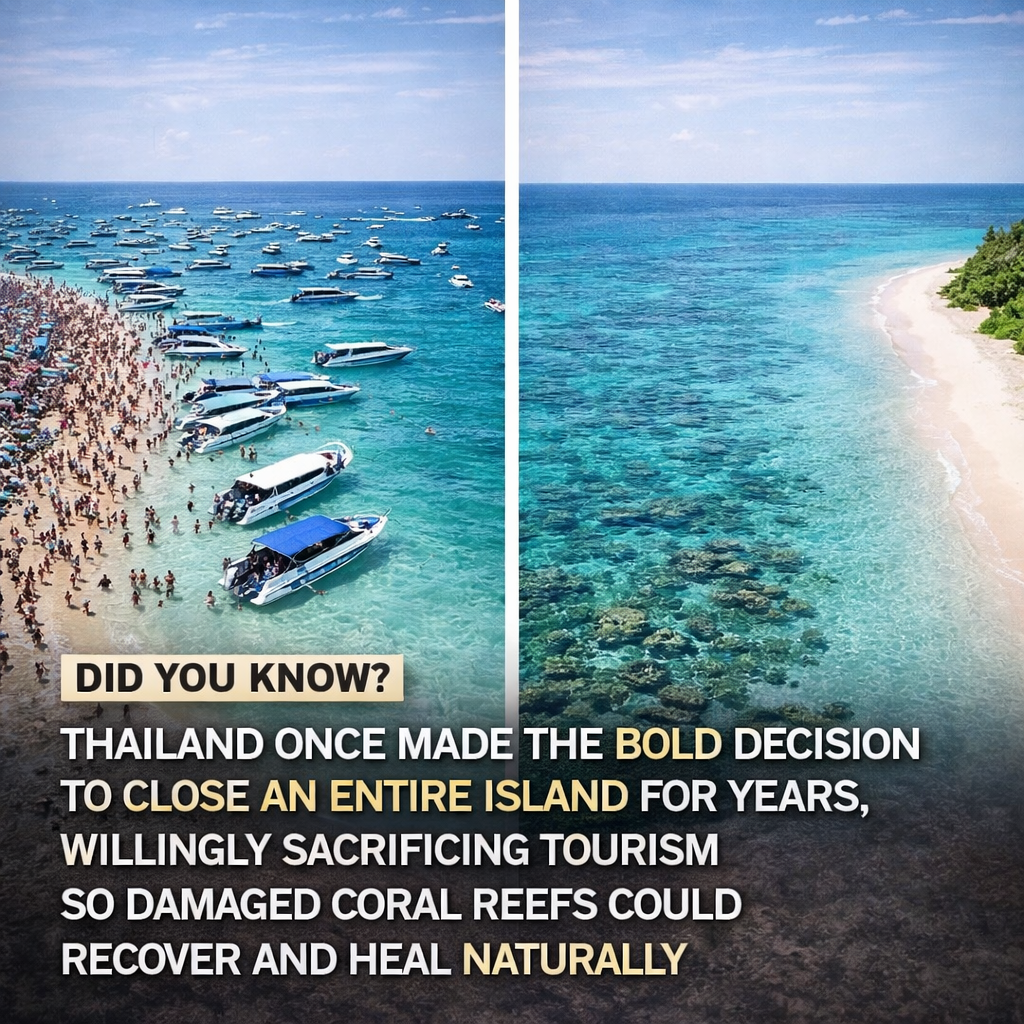
The story of Maya Bay in Koh Phi Phi Leh has become one of the most powerful real-world examples of environmental recovery through decisive action. Once known as one of the most beautiful beaches in the world, the bay also became a symbol of how unchecked tourism can damage fragile ecosystems—and how bold policies can help restore them.
Maya Bay first gained global attention after the release of the film The Beach, which showcased its crystal-clear waters and dramatic limestone cliffs. Following the film’s success, tourism surged rapidly. Boats began arriving in large numbers, bringing thousands of visitors daily. At its peak, the bay was receiving up to 5,000 tourists per day.
This level of traffic placed enormous pressure on the local environment. Anchors from boats damaged coral reefs, while sunscreen chemicals and pollution further degraded marine life. Over time, the impact became severe. Studies indicated that a significant portion of the coral had been destroyed, and many species of fish and marine animals had disappeared from the area. The once-thriving ecosystem was showing clear signs of collapse.
In 2018, the Thai government made a decision that stood out globally. Authorities closed Maya Bay entirely to tourism. No boats were allowed to enter, and visitors were banned from the area. Initially, the closure was planned for just four months to allow the ecosystem to recover. However, the extent of the damage led officials to extend the closure repeatedly. In total, the bay remained closed for nearly four years.
During this period, marine biologists and environmental experts monitored the area closely. Without human interference, natural processes began to take over. Coral reefs slowly regenerated, and water quality improved significantly. Perhaps most notably, marine life started to return. Species that had disappeared from the bay were observed again, including blacktip reef sharks—an important indicator of a healthy marine environment.
When Maya Bay reopened in 2022, the changes were evident. Coral coverage had increased, biodiversity improved, and the overall ecosystem showed strong signs of recovery. The results demonstrated how quickly nature can respond when given the opportunity to heal without external pressure.
However, reopening did not mean a return to previous conditions. Thai authorities introduced strict new regulations to prevent further damage. The number of daily visitors is now limited, and boats are no longer allowed to enter the bay directly. Instead, tourists must dock at a designated area away from the main beach and walk in. Swimming in certain parts of the bay is also restricted to protect marine life.
These measures reflect a shift in how tourism is managed—not just in Thailand but as a model for other destinations worldwide. The Maya Bay case highlights the importance of sustainable tourism, where environmental protection is balanced with economic activity. While the closure resulted in a temporary loss of tourism revenue, it ultimately preserved the natural asset that attracts visitors in the first place.
The decision to shut down such a popular destination was not without challenges. Tourism is a major contributor to Thailand’s economy, and closing one of its most famous sites required political will and long-term thinking. Yet, the success of Maya Bay’s recovery has shown that environmental conservation can lead to lasting benefits, both ecological and economic.
Today, Maya Bay stands as a reminder that ecosystems are resilient—but only if given the chance to recover. It also raises an important question for other countries facing similar challenges: how far are they willing to go to protect their natural resources?
In the end, the restoration of Maya Bay proves that sometimes the most effective solution is not to intervene more, but to step back and allow nature to rebuild itself.