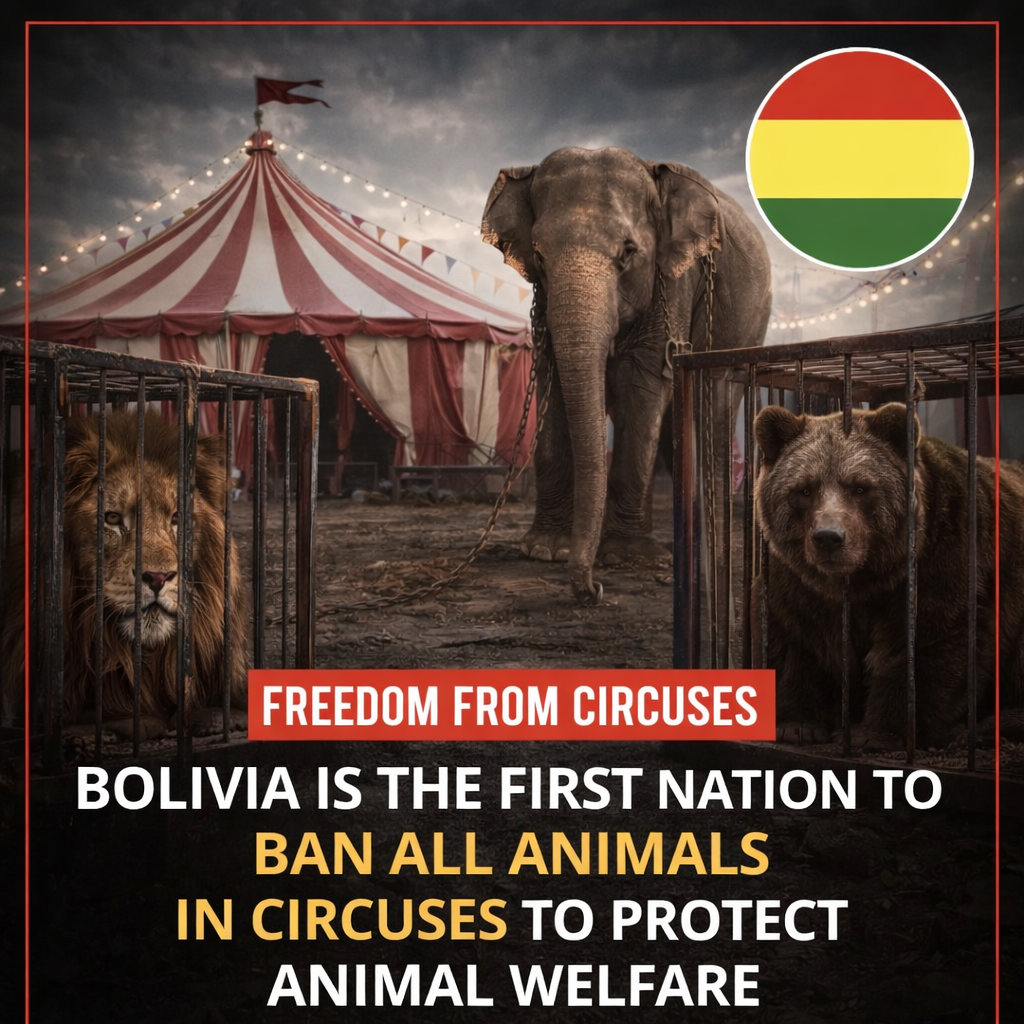
For decades, circus performances around the world were seen as harmless family entertainment—bright lights, lively music, and animals performing astonishing tricks. But behind the scenes, a very different reality often existed. Animals were never meant to perform under artificial lights, nor to live lives confined to cages and constant travel. Their presence in circuses came at a cost—one that was rarely visible to the audience.
Circus animals, both wild and domestic, frequently endured harsh conditions. Many spent most of their lives in small, restrictive enclosures, transported from one location to another with little stability. They were trained to perform unnatural behaviors—lions jumping through hoops, elephants balancing on stools, monkeys riding bicycles. These acts, while entertaining to spectators, often relied on coercion, fear-based training, and deprivation. Over time, such treatment led not only to physical harm but also to deep psychological stress.
Public perception began to shift as investigations and animal welfare organizations exposed these realities. Reports highlighted the suffering endured by animals in circuses—malnutrition, injuries, and signs of emotional distress such as repetitive movements and aggression. As awareness grew, so did global concern. People began questioning whether entertainment justified such cruelty.
In 2009, a groundbreaking decision changed the conversation forever. Bolivia became the first country in the world to ban the use of all animals in circuses. This was not limited to wild animals like lions, tigers, or bears. The law extended to every animal—horses, dogs, and even birds. It marked a bold and comprehensive stance: no animal should be exploited for human entertainment.
This decision was the result of years of advocacy and mounting evidence. Animal welfare groups worked tirelessly to document the conditions inside traveling circuses. Their findings sparked public outrage and pushed lawmakers to act. The Bolivian government recognized that the issue was not just about individual cases of mistreatment, but about a system that inherently compromised animal welfare.
The ban sent a powerful message to the world. It acknowledged that forcing animals to perform is not a benign tradition but a form of cruelty. More importantly, it set a precedent. Other countries began to reevaluate their own policies, with many introducing restrictions or complete bans on wild animals in circuses. Bolivia’s action became a turning point in the global movement for animal rights.
However, the transition was not without challenges. Once the ban was implemented, hundreds of animals needed to be relocated. Many had spent their entire lives in captivity and could not simply be released into the wild. International organizations stepped in to rescue, rehabilitate, and rehome these animals in sanctuaries where they could live in safer and more natural conditions. It was a complex process, but one driven by compassion and responsibility.
Beyond the immediate impact, Bolivia’s decision sparked a broader conversation about how humans interact with animals. It encouraged a shift in thinking—from viewing animals as performers to recognizing them as sentient beings with needs, emotions, and rights. This change in perspective is crucial, not only for circuses but for all areas where animals are used for entertainment.
Today, audiences are increasingly drawn to alternative forms of entertainment that do not rely on animal performances. Human-only circuses, digital shows, and immersive experiences are proving that creativity does not require exploitation. In fact, many argue that removing animals from circuses has allowed for more innovative and ethical performances.
Bolivia’s bold move in 2009 remains a powerful example of how meaningful change can begin. It showed that progress is possible when awareness leads to action, and when societies choose compassion over tradition. While the journey toward global animal welfare is ongoing, moments like this serve as milestones—reminders that change often starts with a single decision.
In the end, this was never just about circuses. It was about redefining humanity’s relationship with animals. It was about drawing a clear line between entertainment and ethics. And most importantly, it was about recognizing a simple truth: animals are not performers. They are living beings who deserve freedom, dignity, and respect.
Sometimes, real progress begins when one place chooses to say—enough. 🐾💛